
FAQ Diagnostics for dizziness & balance disorders
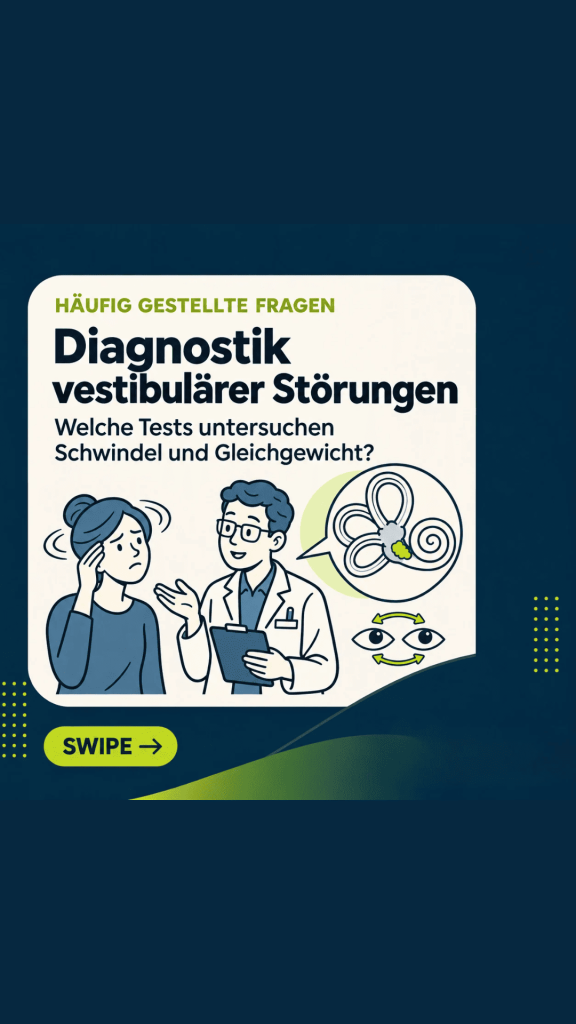
Dizziness when turning in bed, impaired balance in the dark, or persistent drowsiness: The causes of dizziness are manifold, and the diagnosis must be equally nuanced. But what examinations are actually available and what do inconspicuous results mean? The most important steps of vestibular diagnostics: • History and red flags: The initial step is an extensive doctor’s interview and a clinical examination […]
FAQ Cholesteatoma
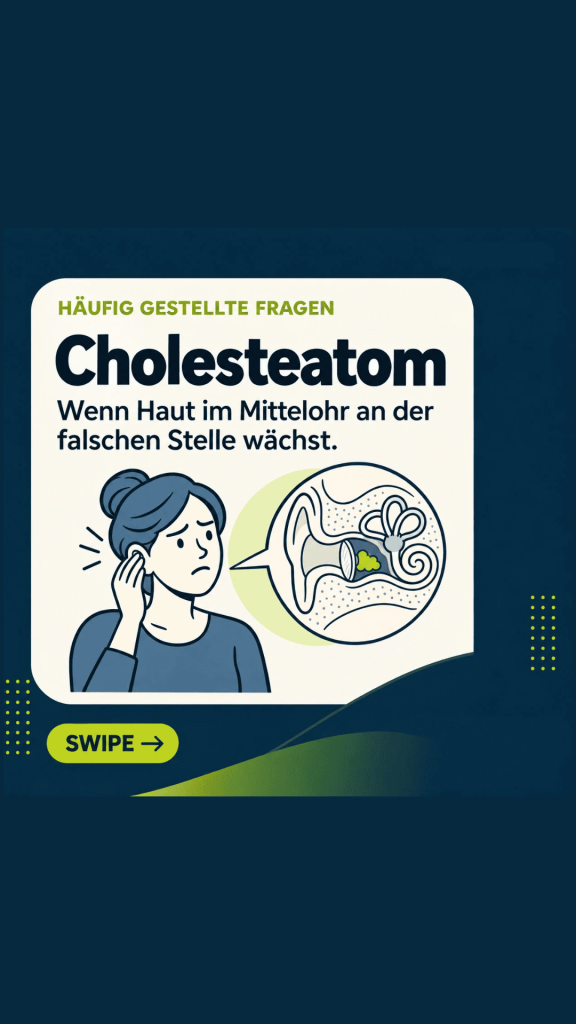
When skin grows in the middle ear in the wrong place! 1-sided ear discharge, gradual hearing loss, or suddenly developing vertigo? Behind these symptoms may lie cholesteatoma: a rare tumor in the ear. The most important facts about cholesteatoma at a glance: • What is a cholesteatoma? It is a benign skin growth in the middle ear behind the eardrum. Important: It is […]
Persistent dizziness, drowsiness and overstimulation in the supermarket? Here's what you need to know about PPPD!

Have you been suffering from persistent dizziness for months but can’t find a physical cause with conventional examinations? Take a look at the charts for the most important answers regarding PPPD (Persistent postural-perceptual dizziness): ㅤ 1️⃣ What is PPPD? Typical symptoms include dizziness, lightheadedness, and instability in standing and walking for most days for at least 3 months. ㅤ 2️⃣ Is PPPD […]
When dizziness and anxiety overlap!

Recurring dizziness attacks, constant drowsiness, extreme sensitivity to stimuli and an increasing fear of the next movement? Often, sufferers face a dilemma because the symptoms of two disease pictures overlap: vestibular migraine (VM) and persistent postural-perceptual dizziness (PPPD). Why an accurate differentiation is crucial for your therapy: • Migraine is more than just a headache: In a vestibular migraine, the […]
FAQ CANVAS syndrome
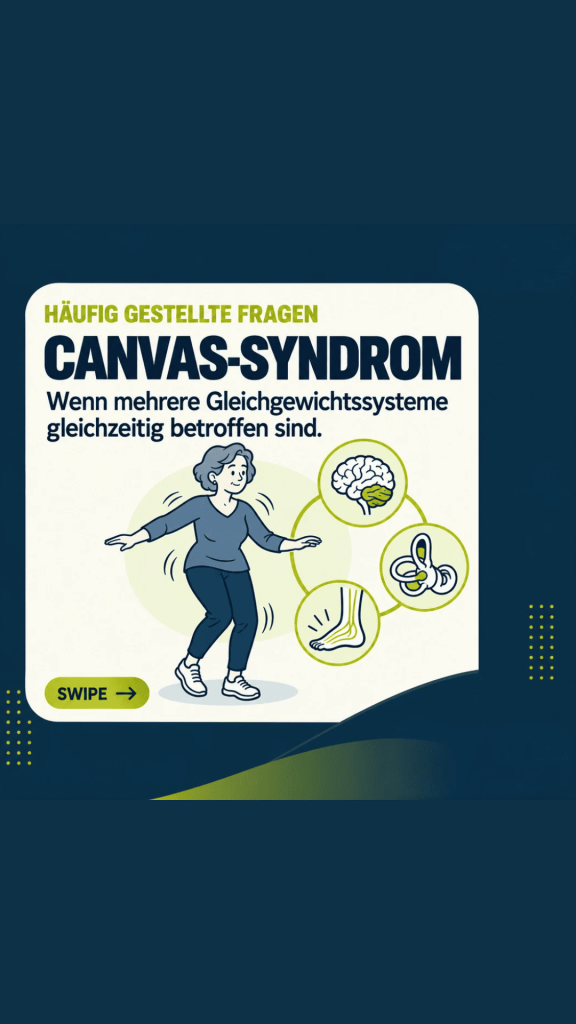
Uncertainty when walking, shaky vision when moving the head and numbness in the feet? If several balance systems are disturbed at the same time, the CANVAS syndrome may be behind it. The most important facts in summary: • What does CANVAS mean? The abbreviation stands for three disorders: cerebellar ataxia (brainstem: coordination impaired), neuropathy (sensory nerves: depth sensitivity is absent) and vestibular areflexia (both inner ears: gaze stabilization reflex […]
FAQ Bow joint dehiscence
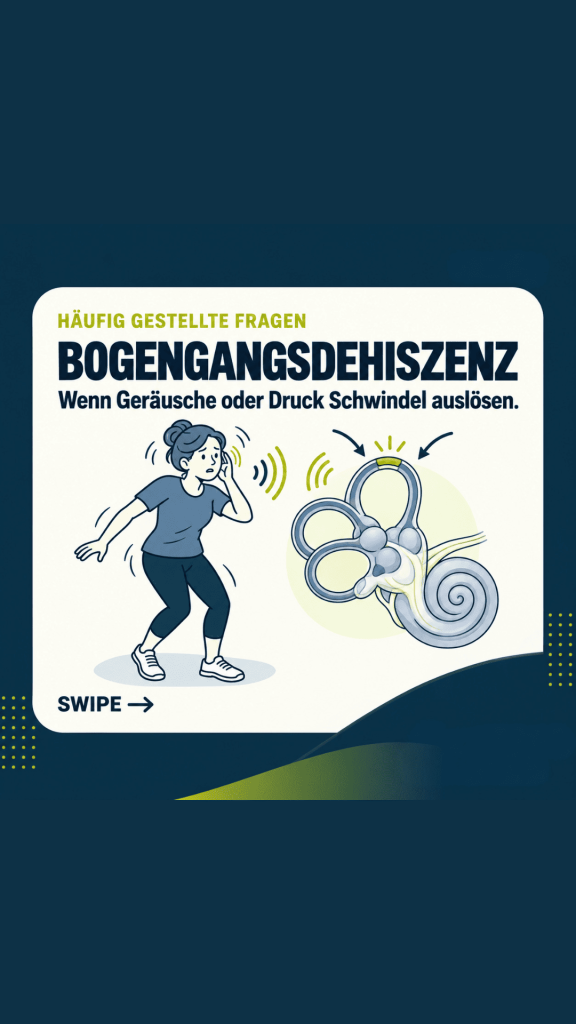
Dizziness caused by noise or pressure? Do you feel dizzy when you hear loud sounds, when you cough, when you press or fly? Do you perceive your own voice or your heartbeat unnaturally loud? Behind these symptoms may lie a branchial artery dehiscence. The key facts in a nutshell: • What is a branchial artery dehiscence? A small bony opening in the upper branch of the inner ear creates a „third window“. […]
Dizziness in the supermarket?

Full shopping malls, glaring lighting, endless rows of shelves or fast screens: For many people with vestibular disorders, everyday situations suddenly become an extremely demanding test. But why do dizziness, uncertainty and drowsiness intensify so massively just then? What happens in many simultaneous stimuli in the nervous system: • Vision, hearing, movement: The balance system continuously processes visual and movement-related information […]
FAQ Autoimmune inner ear disease
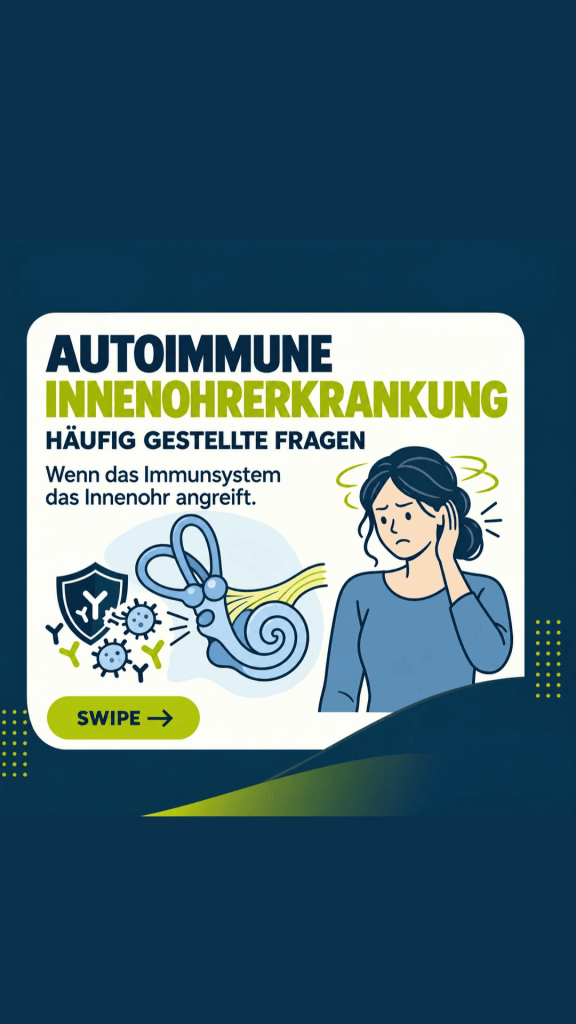
When the immune system attacks the inner ear! Does hearing quickly decline, hearing fluctuate, or are tinnitus, a feeling of pressure in the ear, and dizziness added? Behind such complaints may lie a so-called autoimmune inner ear disease, in which the body’s own defense forces accidentally attack sensitive structures in the ear. The most important facts about autoimmune inner ear disease: • What happens in the ear: The immune system […]
Why is dizziness so extremely exhausting!
„I wish others would understand how much effort it takes to just feel normal.“ For outsiders, dizziness is usually invisible, but for those affected, every single day is an enormous effort. Why does balance take so much energy: • Loss of lightness: People without vestibular disorders stand, walk, and focus on things without even […]
FAQ Acoustic neuroma
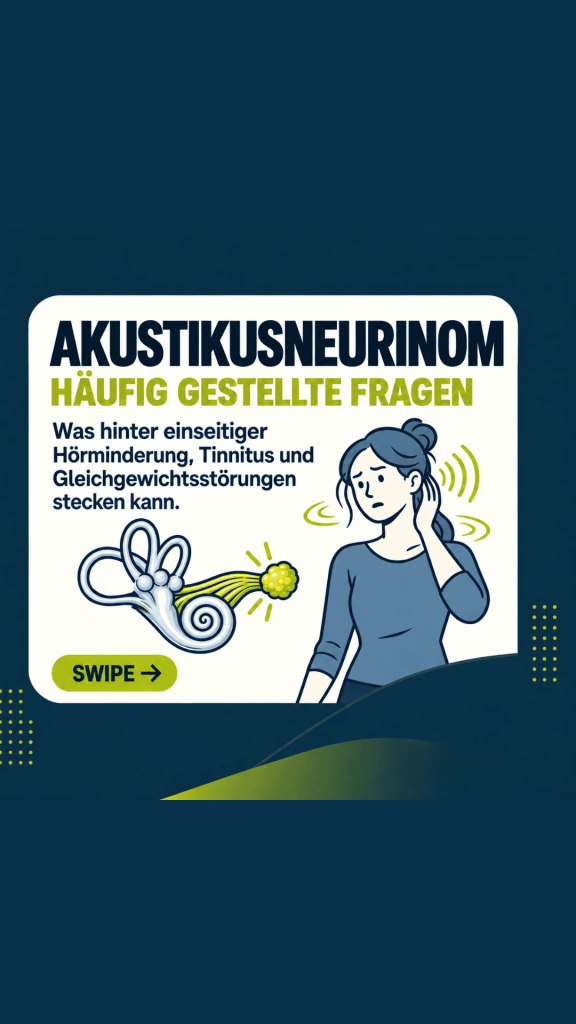
Dizziness and tinnitus in one ear? If hearing in one side worsens, a constant ringing in the ear occurs, or walking becomes unstable, many people initially think it’s a harmless problem or a hearing loss. But behind these symptoms can also be a so-called acoustic neuroma. What you should know about the acoustic neuroma: • What is an acoustic neuroma? […]
Brain fog with dizziness: Why the head is blocked!

Do you know the feeling of cotton in the head when every thought weighs heavy and you feel mentally exhausted? Many people with vestibular disorders struggle with this phenomenon daily. Often, those affected are told that it is just an illusion or stress. However, neurology clearly shows what is really happening in the brain. Why dizziness leads to „fog in the brain“: • […]
Does the dizziness really come from the neck?

Dizziness and neck pain occur simultaneously in many people. Often, it is too quick to assume that it is caused by the cervical spine (CVS). However, from a scientific perspective, this association is by no means proven. Often, there is a completely different cause behind it. What is the connection between neck pain and dizziness and what is not: • Not scientifically proven: A connection is often suspected, but it is not always clear whether it is causal or not. […]
Dizziness that no one sees!

How do vestibular symptoms feel? Many balance disorders are hardly noticeable from the outside. To other people, everything often seems completely normal, but there is a constant state of emergency within the body itself. When the vestibular organ or the processing of sensory information malfunctions, this has a massive impact on everyday life. Five typical sensations at a glance: 1. Swaying or swaying: Those affected often describe a sensation […]
FAQ Bilateral vestibularopathy
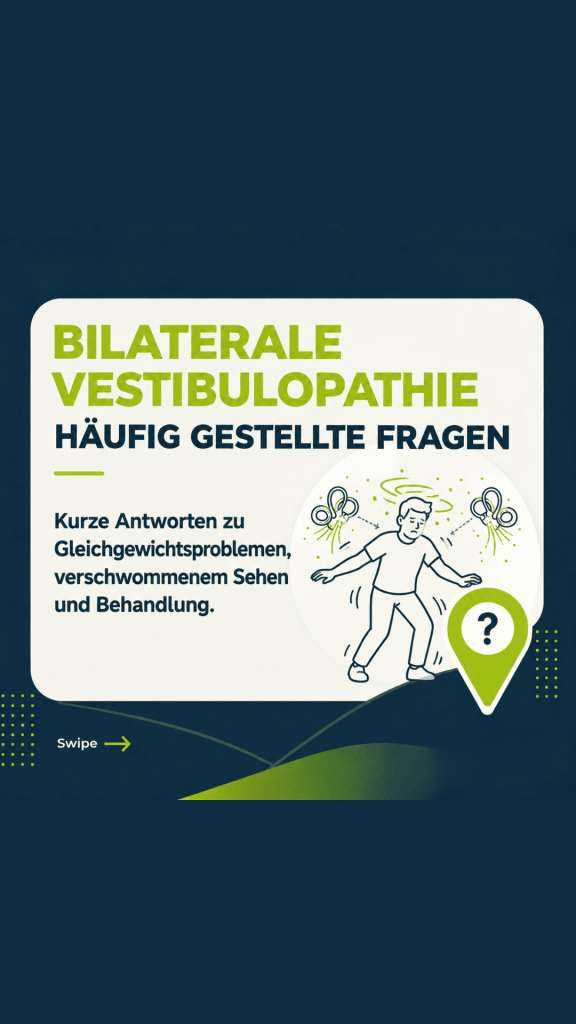
Everything is completely quiet and inconspicuous when you sit down; but as soon as you stand up, you lose the secure hold you had before. In bilateral vestibular pathology, both balance organs in the inner ear are impaired in their function. The brain thus lacks crucial signals for orientation in space. The most important facts & criteria at a glance: • What does bilateral mean? Bilateral means on both sides. Both […]
Dizziness: When everyday life is tiring

Simply getting up in the morning without thinking about it, walking through the apartment without rushing, or shopping relaxed: What is considered a simple routine for healthy people suddenly requires maximum concentration and enormous energy when dealing with vestibular disorders. Vertigo fundamentally changes everyday life. 5 Everyday moments that suddenly cost energy: ㅤ 1. Moving around and feeling stable while doing so: Whether it’s showering, getting up, or walking through the […]
FAQ Mal de Débarquement: Dizziness after a long journey?
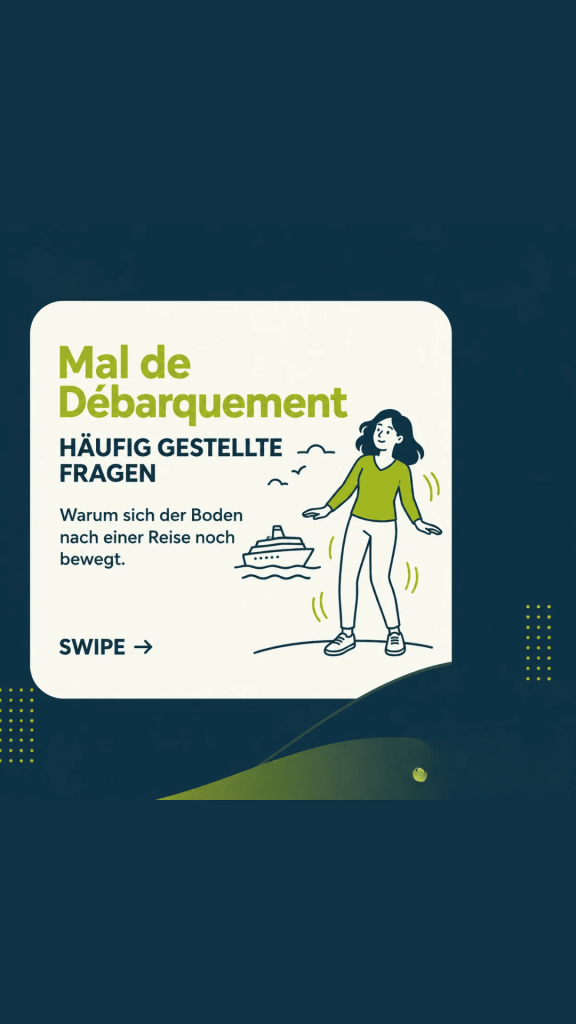
You’ve long since left the ship, but the floor keeps swaying, shaking, or vibrating for days on end? Mal-de-Débarquement Syndrome (MdDS) causes tremendous distress for those affected, especially because imaging procedures and standard tests often remain completely inconspicuous. The key facts: • What is MdDS? A persistent feeling of swaying, shaking, or vibrating, typically after prolonged passive movement (ship, plane, car […]
Dizziness: Symptom groups at a glance!
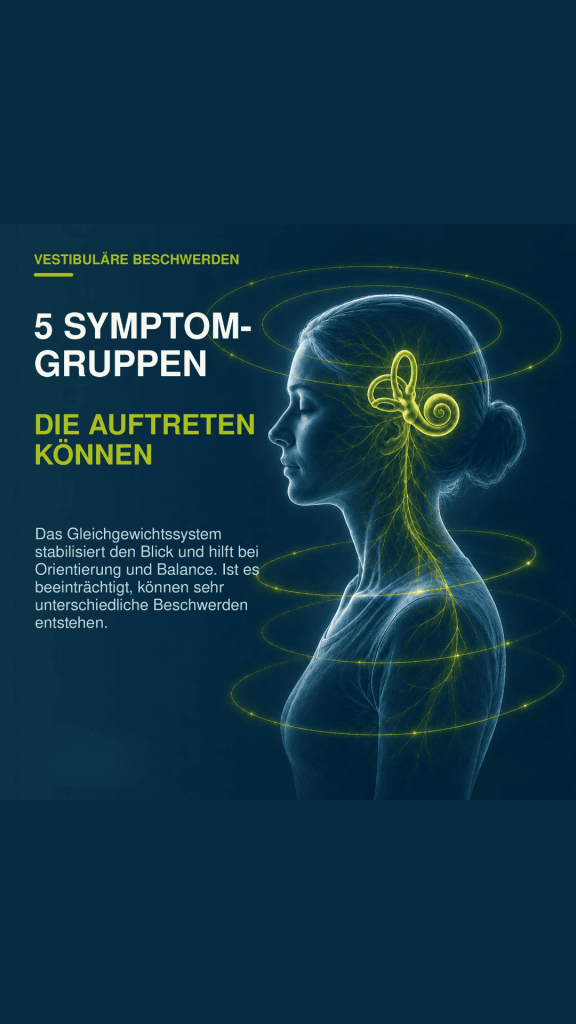
Dizziness is much more than just a brief rotation in the head. Since the balance system is deeply interconnected with the eye muscles, the autonomic nervous system, and emotional centers in the brain, a vestibular disorder can affect the entire body. The 5 symptom groups at a glance: 1. Balance & Orientation: The classic leading symptom of rotational, swaying, or lifting dizziness over […]
FAQ Dizziness in old age: Presbyvestibular pathology

Many affected individuals and their families still believe that balance problems and dizziness in old age simply have to be accepted. This is a dangerous way of thinking! Because the age-related decline in balance function (presbyvestibulopathy) is a treatable dysfunction and the brain remains trainable until old age. The most important questions and answers from the article: • Not simply „normal“: […]
Dizziness without a diagnosis?

Your complaints are real – even though MRI scans, CT scans and blood tests are completely innocuous! „Everything is organic; you’re just imagining it or it’s just the psyche.“ Countless people hear this phrase with dizziness, drowsiness and a loss of balance. But an innocuous finding does not mean that there is no vestibular dysfunction. Why vestibular disorders are so common […]
FAQ Vestibular migraine

Dizziness attacks, overstimulation in the supermarket and the question of whether migraine can also occur without headaches. Vestibular migraine causes great uncertainty for many sufferers. In this overview, you will find the most important facts at a glance: • Dizziness without a headache? Yes! In vestibular migraine, dizziness often plays a central role. Associated symptoms such as light and […]
Exercises for vestibular vertigo!

After an acute phase of dizziness or persistent difficulty walking and seeing, confusion is often severe: Which exercises are safe? How do I start without overexerting my nervous system? On our website, we offer free, evidence-based introductory exercises from vestibular rehabilitation. What you can expect in the introductory exercises: • Who is it suitable for: Ideal for vestibular dizziness and vertigo […]
FAQ Morbus Menière

Meniere’s disease is an inner ear disorder that can severely affect those affected by sudden and unpredictable episodes. Flip through the cards to learn the most important facts about Meniere’s disease, dizziness, tinnitus, and ear pressure. The most important answers to the most frequently asked questions are summarized below: • What is Meniere’s disease? An inner ear disorder in which a periodic fluid accumulation (endolymphatic hydrops) […]
5 triggers for vestibular vertigo
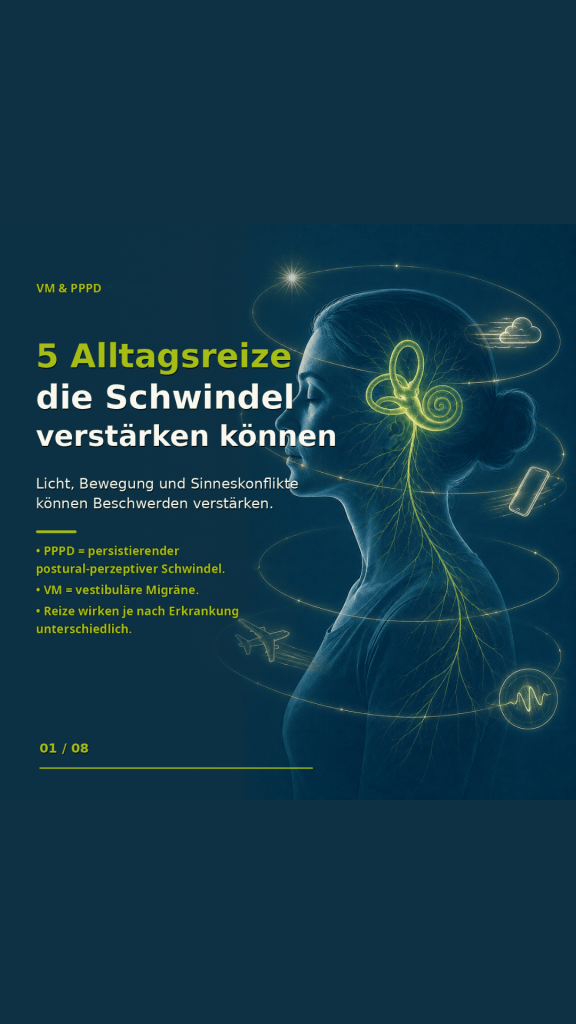
Dizziness is not only triggered by head movements: Especially in PPPD and vestibular migraines, visual patterns, movement in the field of vision, or physical fluctuations lead to a flood of stimuli in the brain: 1. Fluorescent tubes & bright light: Flashing artificial light and bright lighting heavily overload the visual processing in the brain (typically in vestibular migraines or persistent postural-perceptual dizziness – short […]
FAQ: Vestibular neuritis!
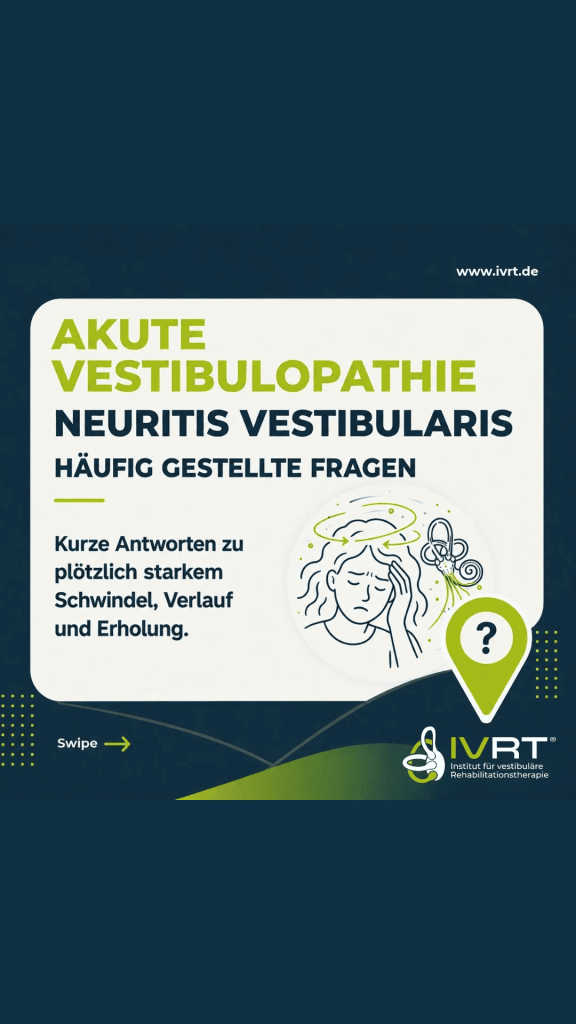
When everything changes in an instant and your sense of balance is lost, the shock is often great. Swipe through the charts for the most important facts about acute vestibular pathology (vestibular neuritis): ㅤ 1️⃣ What is it? A sudden partial or complete loss of a balance organ leads to a significant signal imbalance in the brain – intense dizziness occurs. […]
How dizziness changes everyday life: What a qualitative study shows!

Dizziness is much more than just a physical wobble or rotation – it affects mobility, visual stimuli, and mental health. Scroll through the slides for the results of a qualitative study with 30 participants: 1️⃣ Physical consequences: 100 % of the respondents reported limitations in mobility and balance. Additionally, 73.3 suffered % from nausea […]
How the fear loop maintains your dizziness!
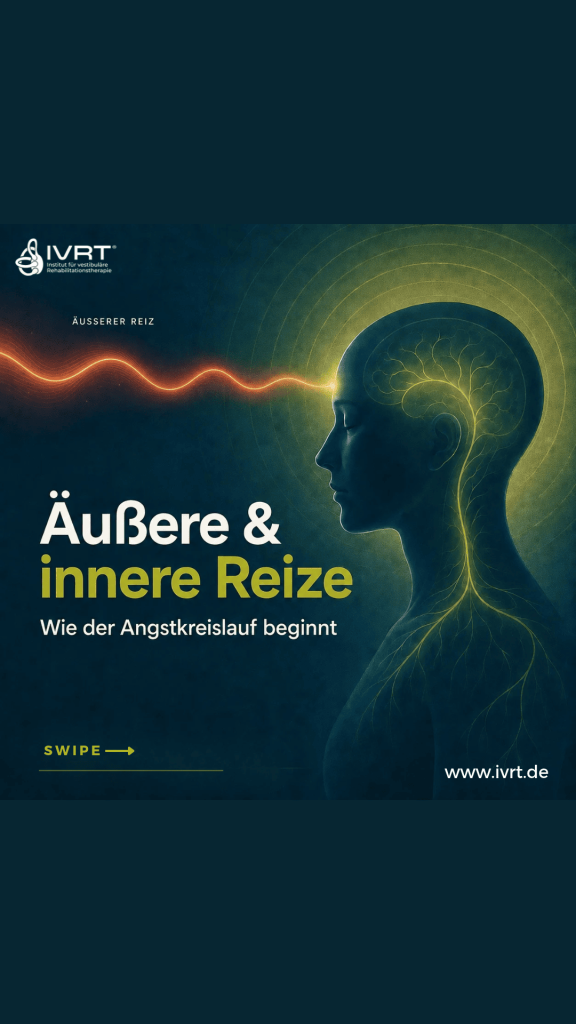
Does your body react immediately with uncertainty, palpitations, or dizziness when exposed to movement or visual stimuli? Scroll through the slides to understand step by step how this vicious cycle in the brain is created: 1️⃣ The trigger (Slides 1 & 2): An external stimulus hits the nervous system, and the body sends out initial signals such as palpitations, tightness, nausea […]
FAQ Storage scam!
Does everything suddenly turn into a whirlwind when you lie down in bed or turn around? Benign paroxysmal positional vertigo (BPLS) is the most common cause of vertigo symptoms – but in most cases it is very easy to treat! 1️⃣ What is BPLS? Solved calcium carbonate crystals in the inner ear send incorrect signals to […]
Dizziness is not the same as dizziness
Dizziness is one of the most common symptoms in medical practice and can have numerous causes – from well-treatable disorders of the balance organ to neurological or internal medicine diseases. Careful diagnosis is crucial, because only when the cause is known can targeted treatment be carried out. While in some vestibular disorders specific positioning maneuvers or vestibular […]
 Deutsch
 English
 Nederlands
 Dansk
 Türkçe

