

Many affected people and their relatives still believe that balance problems and dizziness in old age simply have to be accepted as a fact of life. This is a dangerous misconception! Because the age-related decline in balance function (Presbyvestibulopathy) is a treatable functional disorder and the brain remains trainable until old age.
The most important questions and answers from the article:
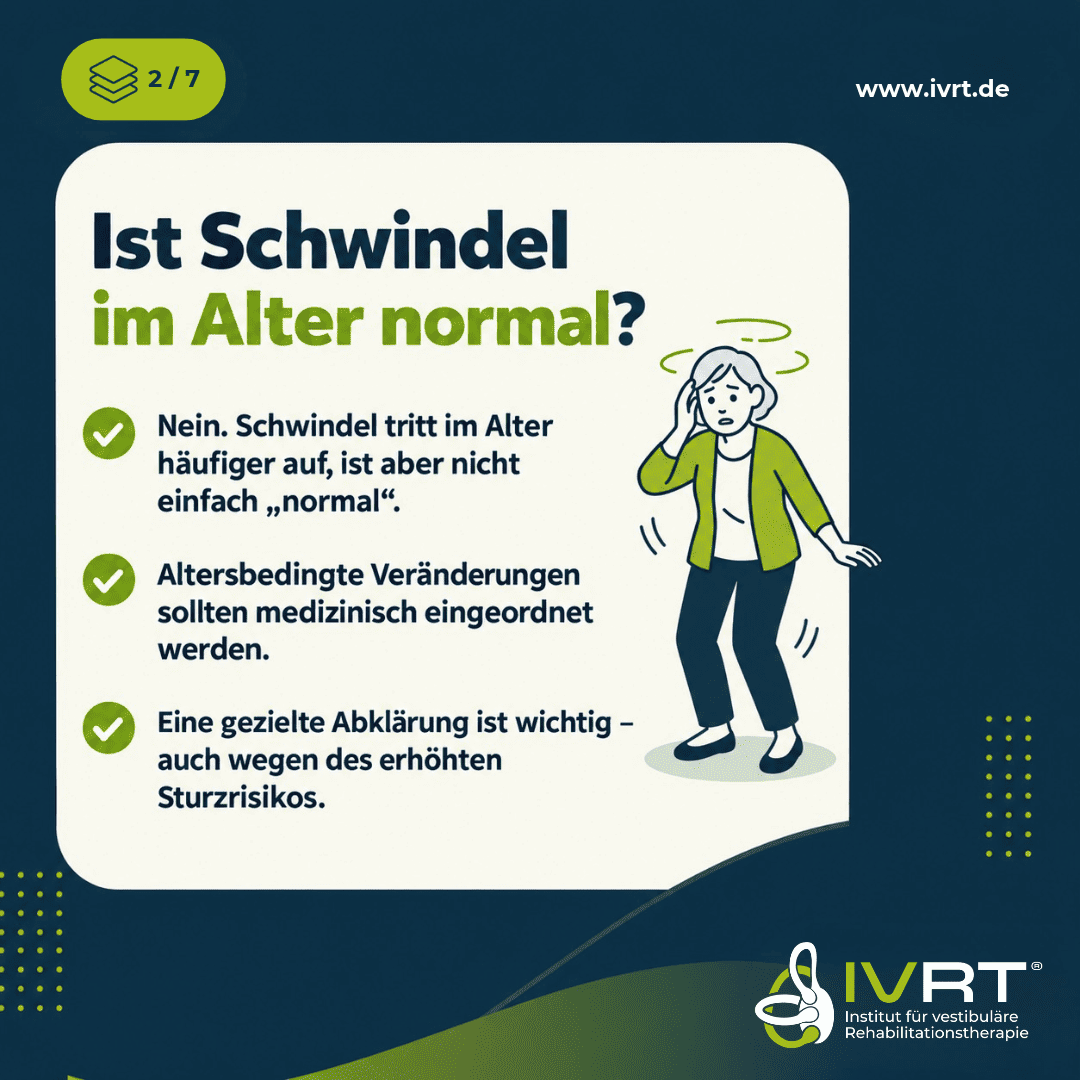
• Not just „normal“: Dizziness does occur more frequently in old age, but it is by no means inevitable. A thorough examination is crucial to identify the causes and prevent falls.
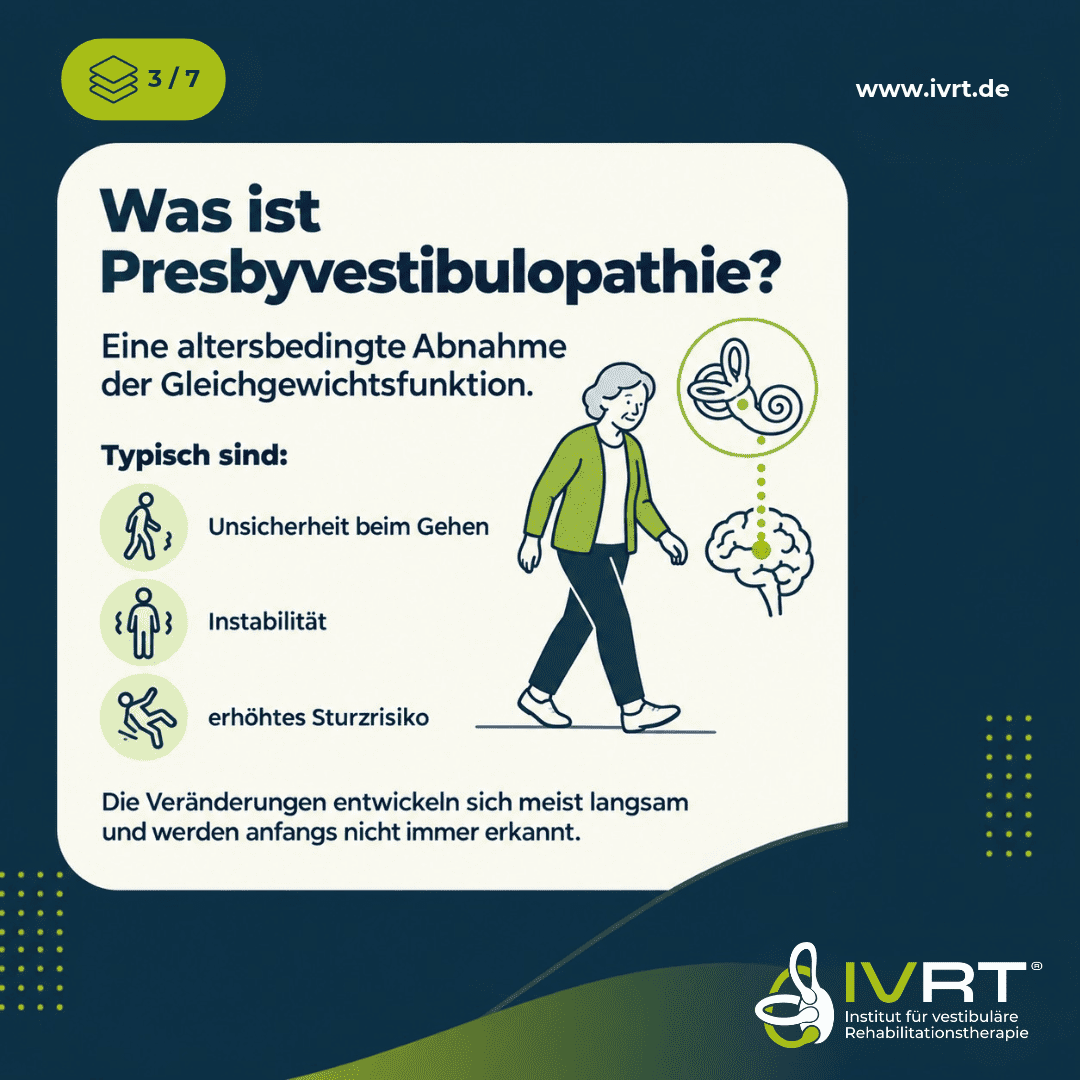
• What is presbyvestibulopathy? A gradual, age-related loss of function in the balance organ in the inner ear. Typical consequences are impaired balance, dizziness, and a significantly increased risk of falling.
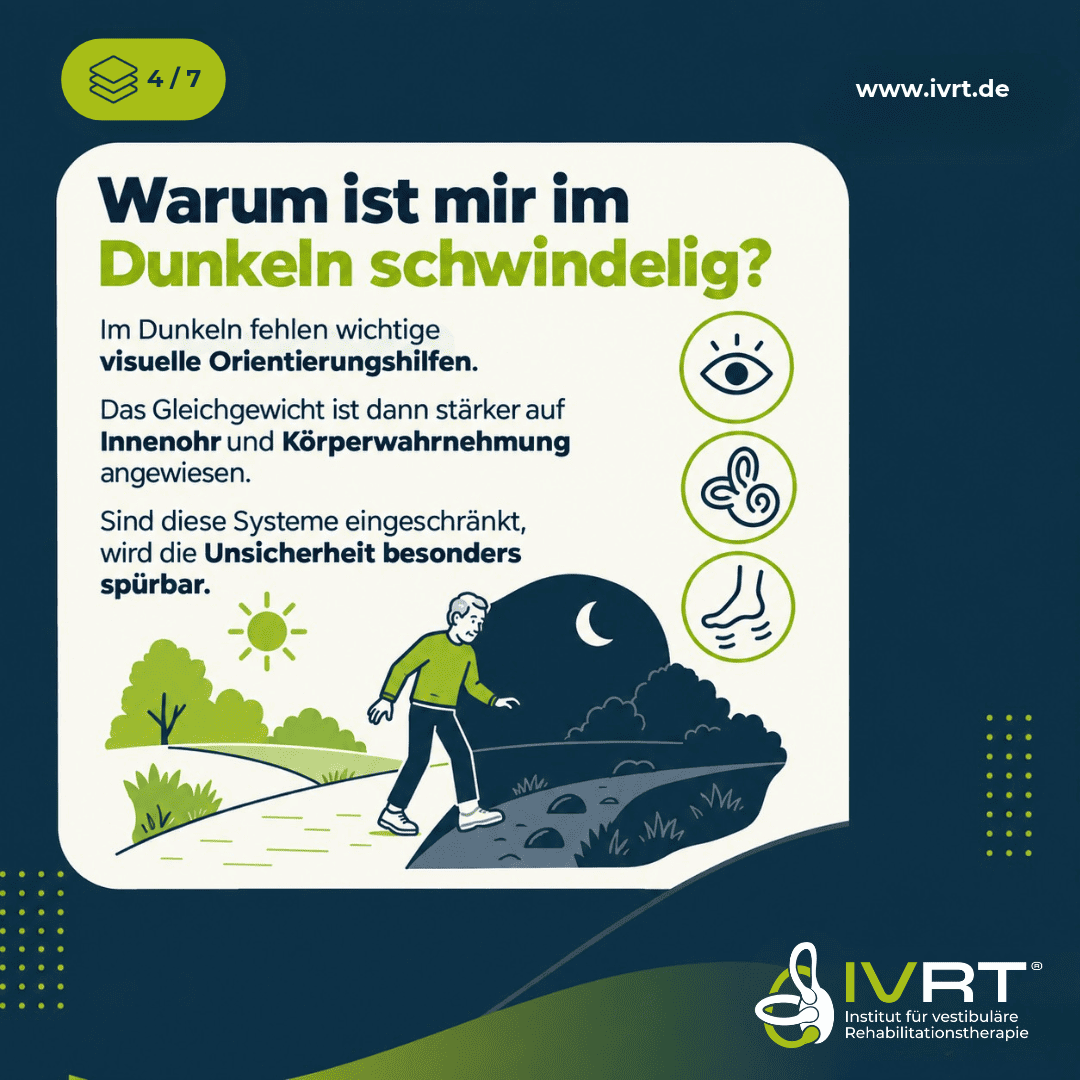
• Why dizziness increases in the dark: In poor lighting conditions, the brain lacks visual anchor points. It has to rely entirely on the inner ear and the muscle/joint sensors. If these systems are weakened, the uncertainty is immediately noticeable.
• Actively reduce the risk of falls: Uncertainty often leads to withdrawal, which causes muscles and balance to deteriorate even faster. Early countermeasures break this vicious cycle.
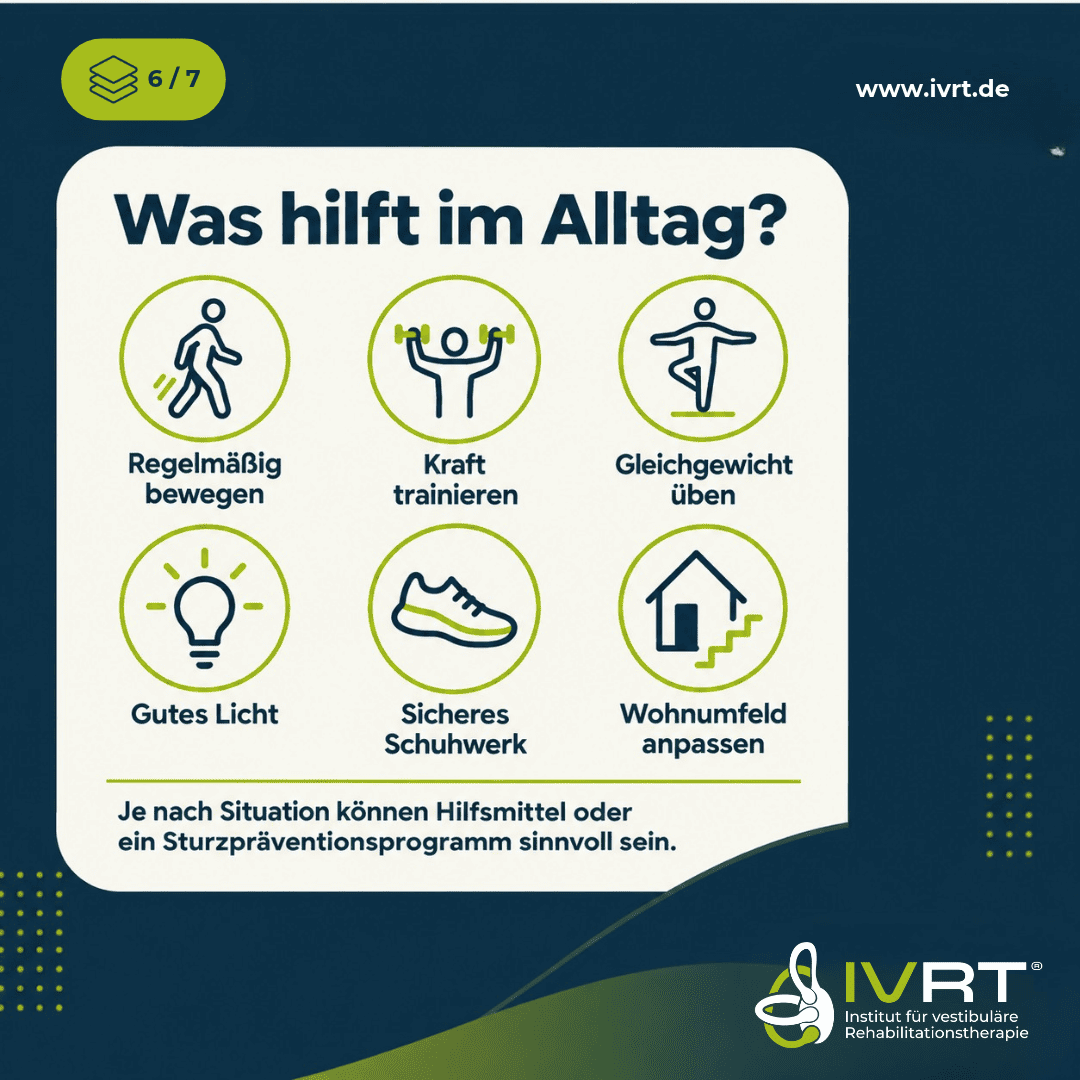
• Help in everyday life: Regular exercise, targeted strength training, adapted living spaces (remove tripping hazards!), bright lighting, and safe footwear provide immediate protection.
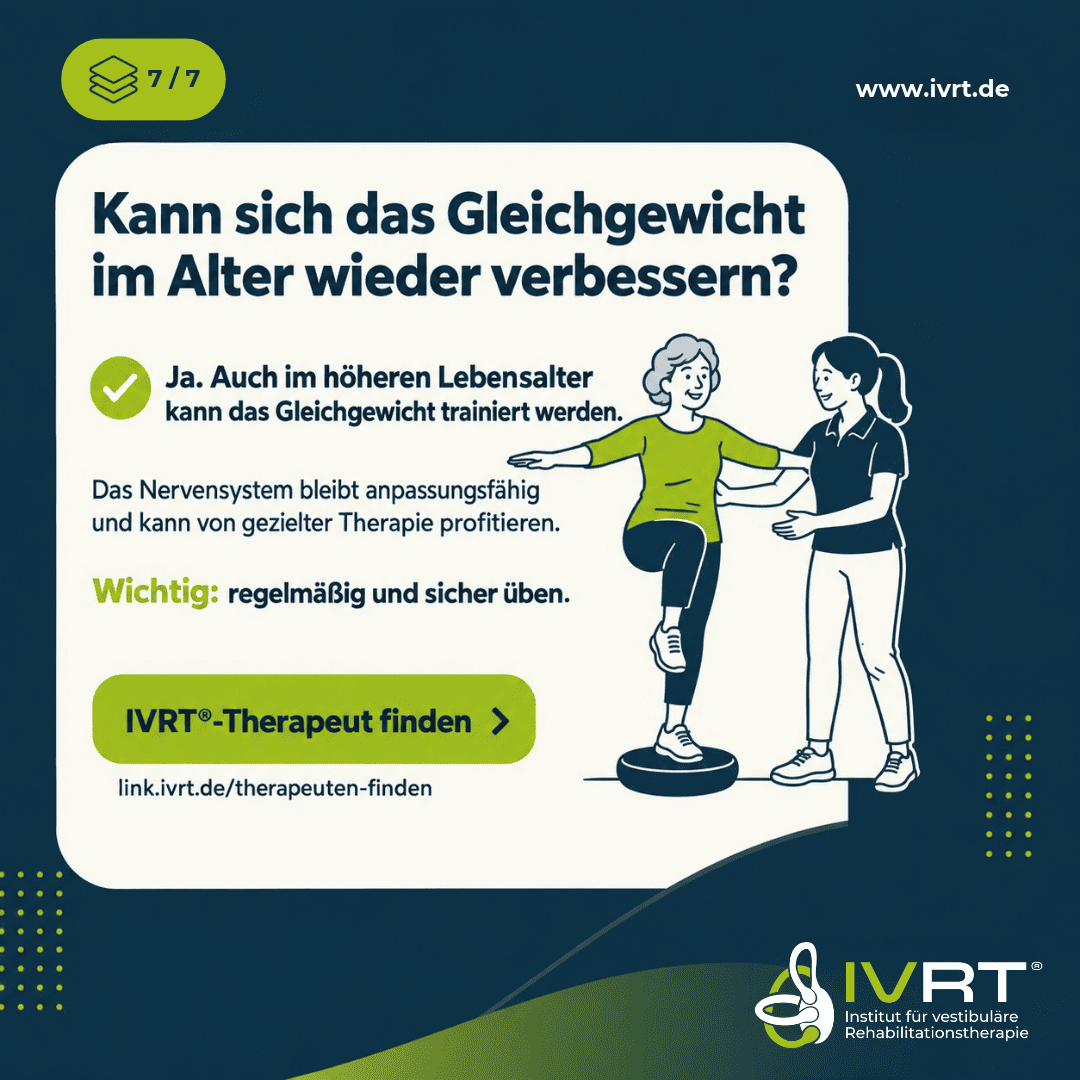
• Balance can be trained: The nervous system does not lose its adaptability with age! By targeted vestibular rehabilitation The brain learns to optimally process remaining signals and regain driving safety.
👉 Do you want to understand the causes, tests, and targeted training for age-related dizziness in detail? Take a look now to our Patient information Go ahead!
📍Are you looking for qualified therapists near you who specialize in dizziness? Use our Therapist search!
 Deutsch
 English
 Nederlands
 Dansk
 Türkçe

