
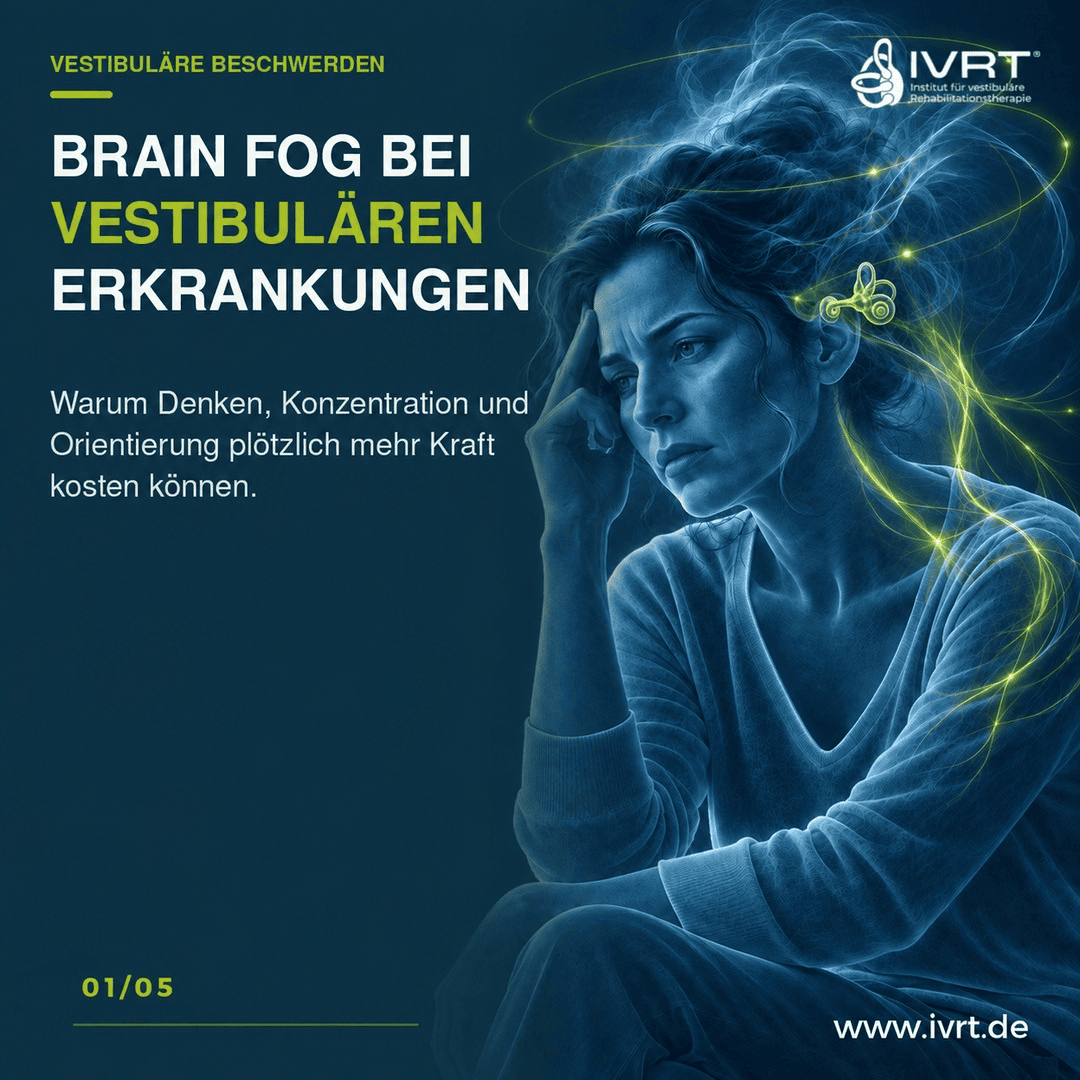



Do you know the feeling of cotton wool in the head when every thought is difficult and mental exhaustion sets in? Many people with vestibular disorders struggle with this phenomenon daily. Often, those affected are told that it is just an illusion or stress. However, neurology clearly shows what is really happening in the brain.
Why dizziness leads to „fog in the brain“:
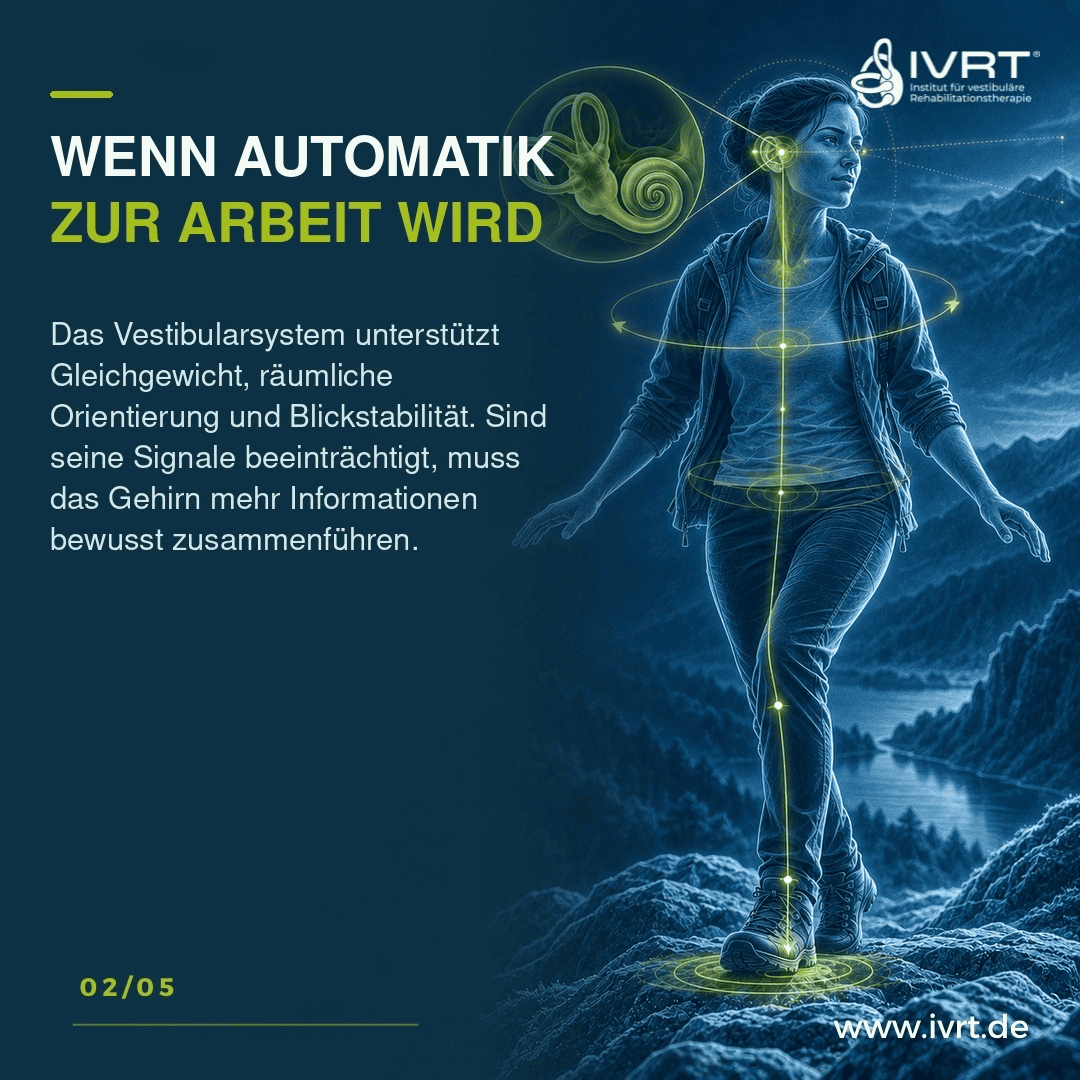
• Sensory processing overloaded: The balance system not only controls balance but also directly influences spatial perception and attention. When this function is impaired, the brain has to exert enormous extra effort to even sort out everyday sensory impressions.
• Brain in high-performance mode: Instead of controlling movements fully automatically in the background as usual, the nervous system must continuously compensate for missing or conflicting signals. This constant extra workload leads to slowed thinking, concentration problems, and severe mental fatigue.
• No imagination required: Brain Fog is not an imagination and not just a matter of the mind. It is a tangible neurological response to sensory overload.
• Exhausted capacities: The more computational power the brain has to use to orient and keep the body upright in space, the less capacity remains for memory, focus, and parallel tasks.
A targeted vestibular rehabilitation It trains the balance system so that the brain is relieved of its burden and mental clarity returns to everyday life.
📍Are you looking for qualified therapists near you who specialize in dizziness? Use our Therapist search!
 Deutsch
 English
 Nederlands
 Dansk
 Türkçe

