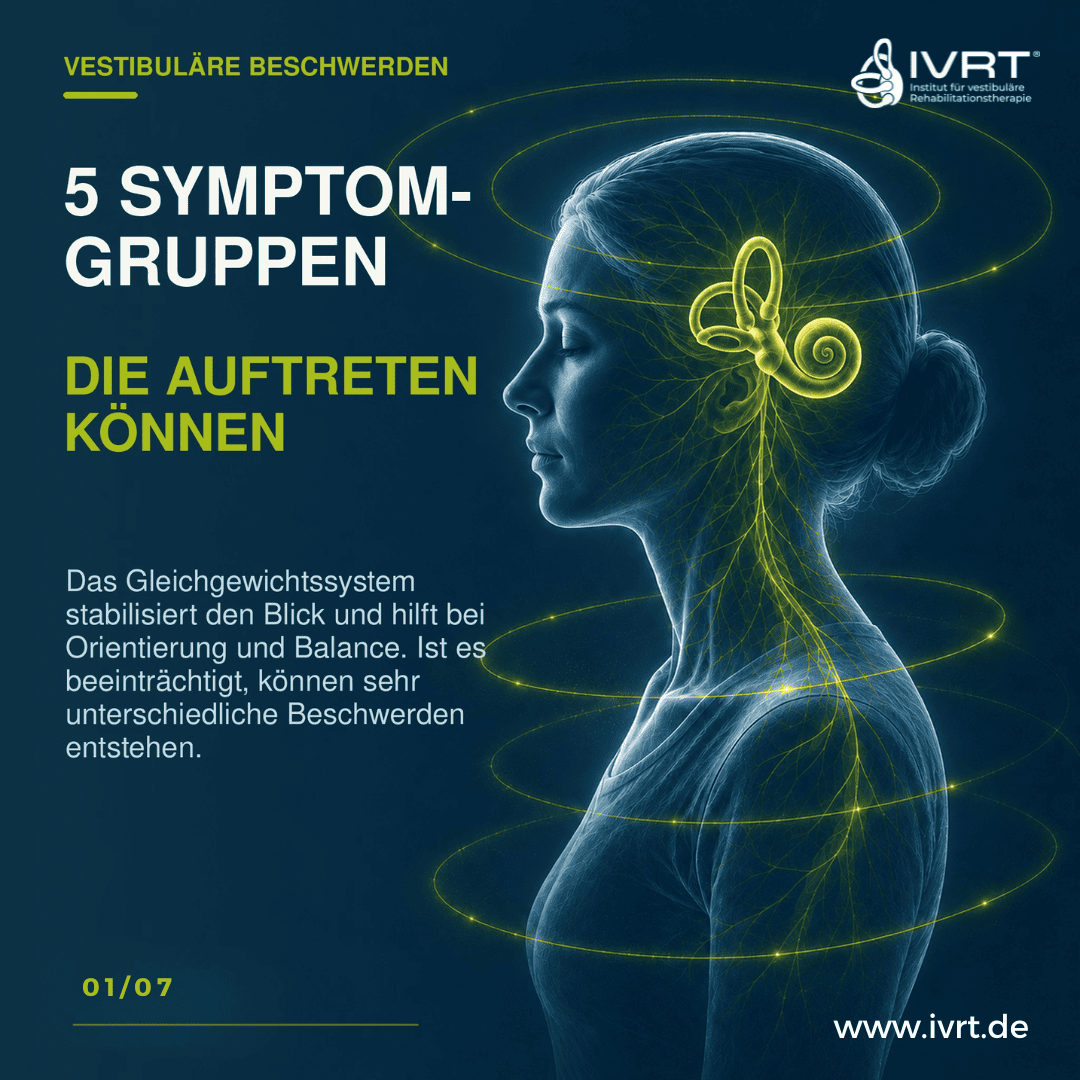

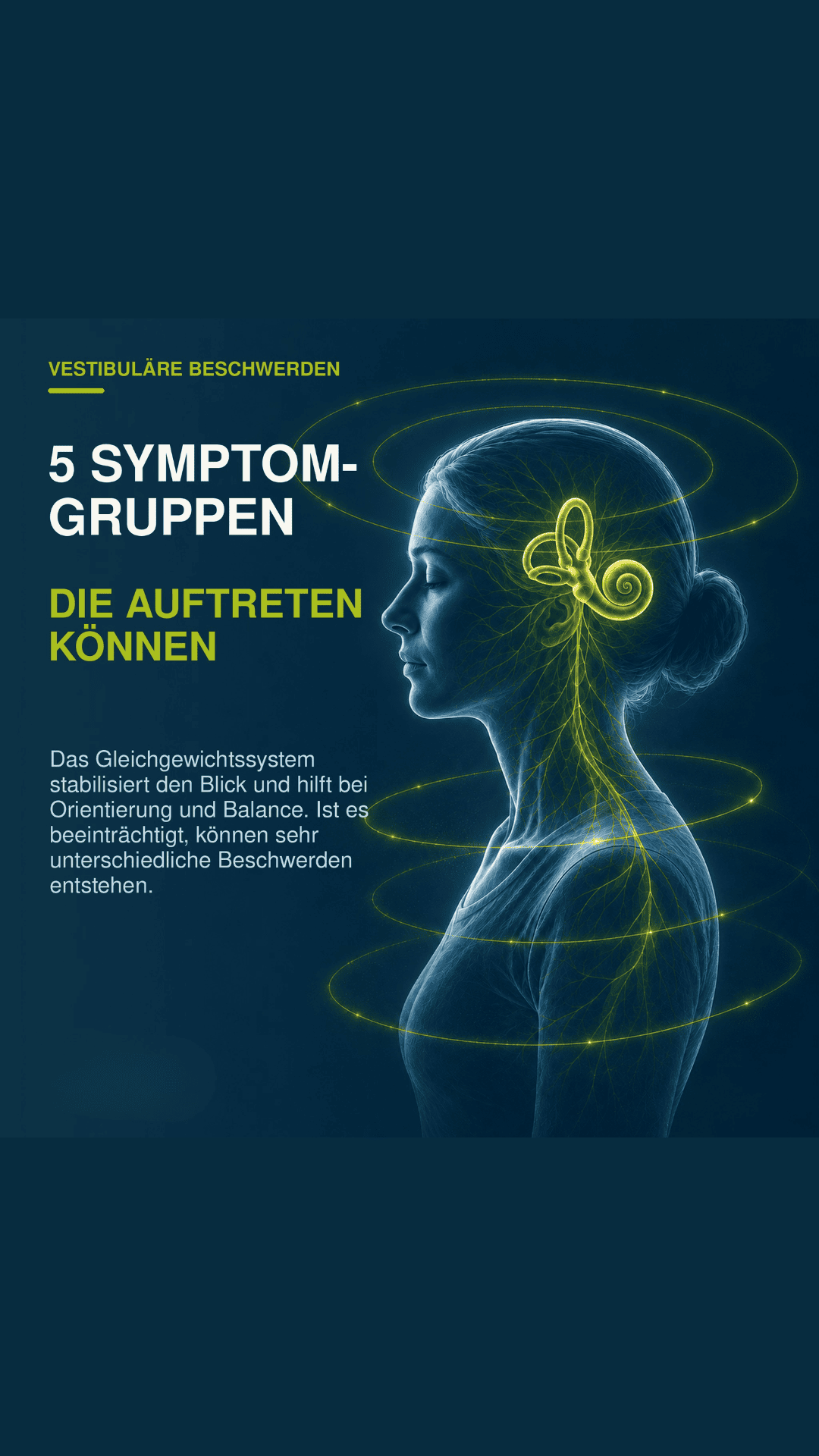
Dizziness is much more than just a brief rotation in the head. Since the balance system is deeply connected to the eye muscles, the autonomic nervous system, and emotional centers in the brain, a vestibular disorder can affect the entire body.
The 5 symptom groups at a glance:
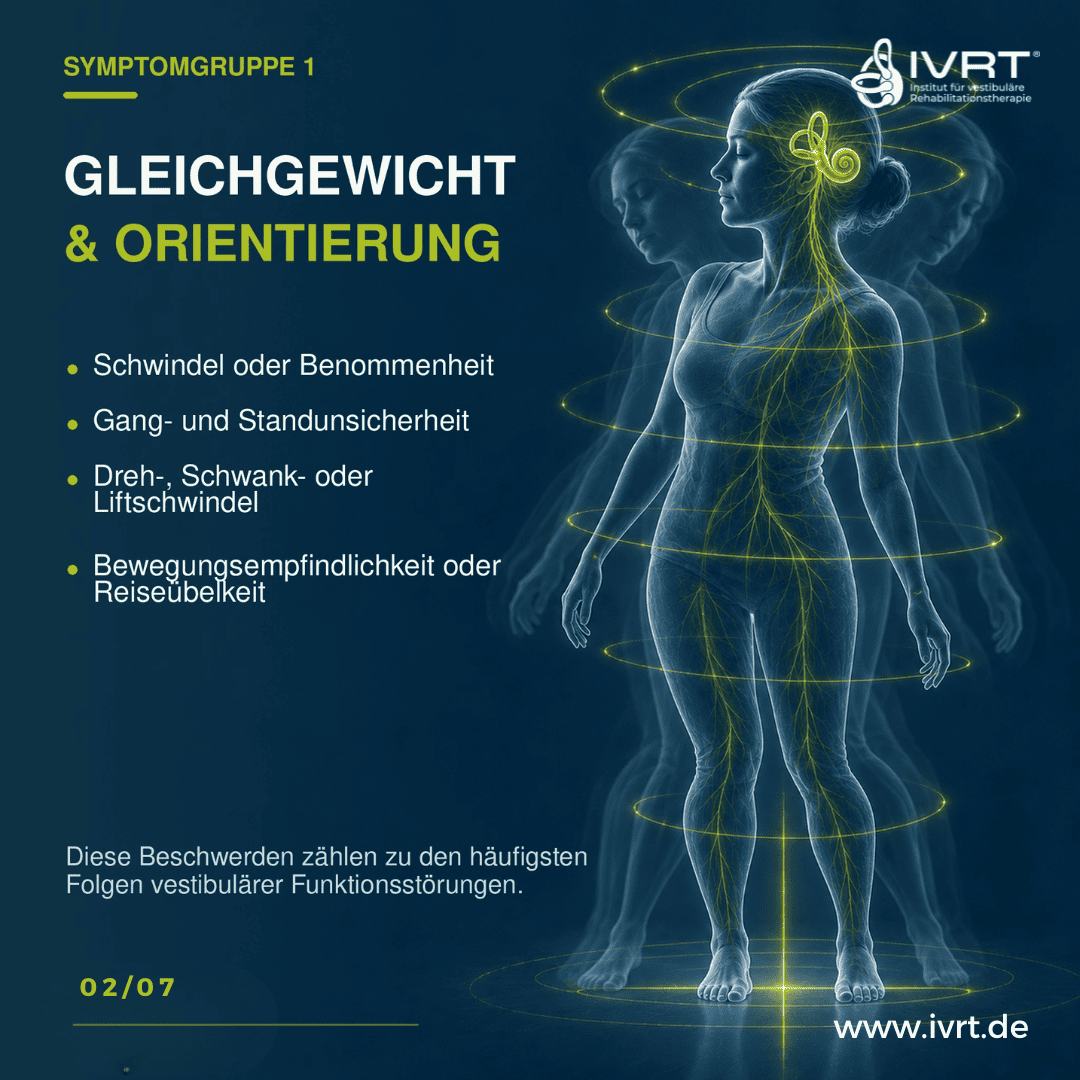
1. Balance & orientation: The classic leading symptoms of rotational vertigo, dizziness, or vertigo caused by motion are general drowsiness, impaired balance, and heightened sensitivity to movement.
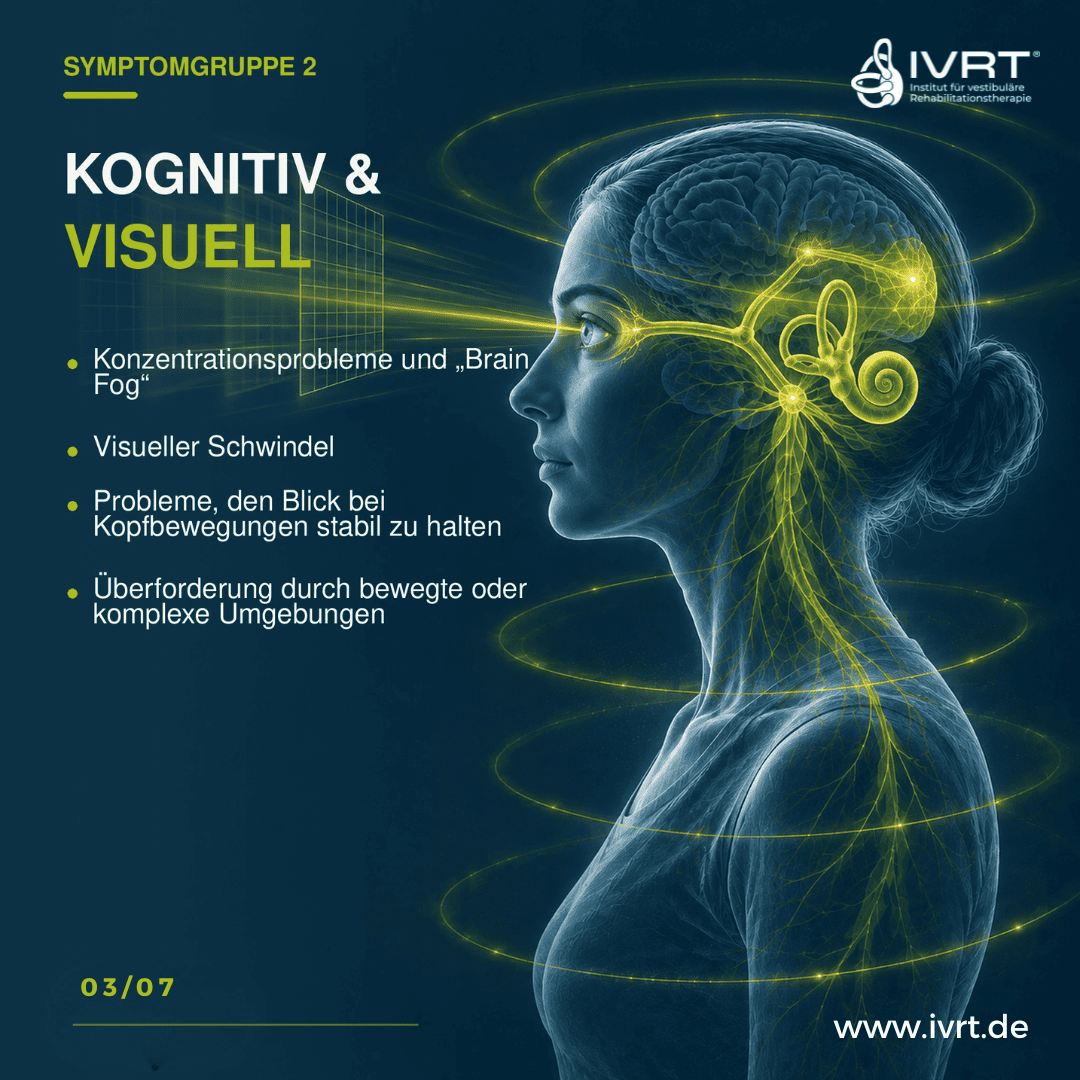
2. Cognitive & Visual: Concentration problems, the feeling of „brain fog“, blurred vision when moving the head and visual overload in supermarkets or crowds of people.
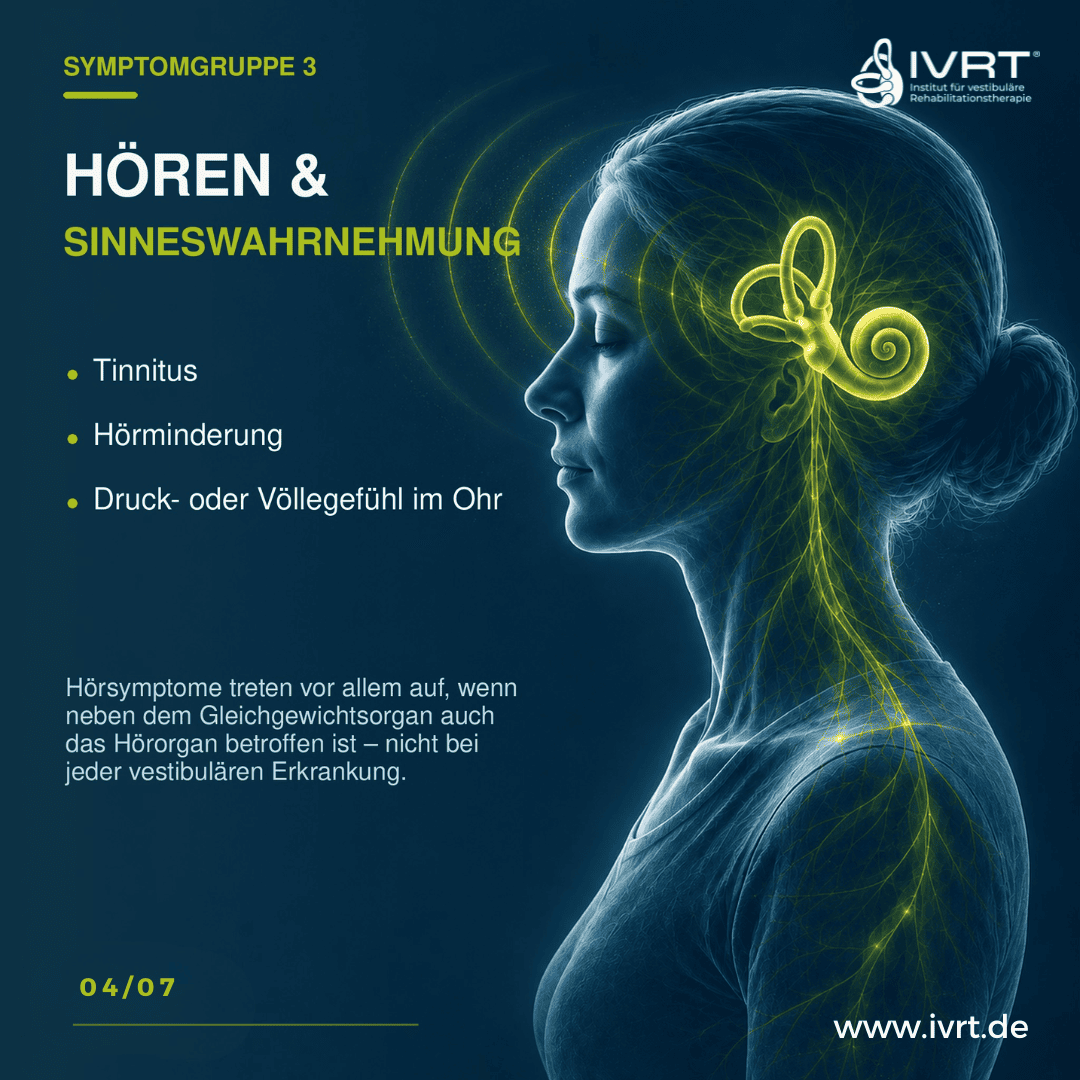
3. Hearing and sensory perception: Tinnitus, hearing loss, or a distressing feeling of pressure and fullness in the ear when the auditory organ is also involved alongside the auditory pathways.
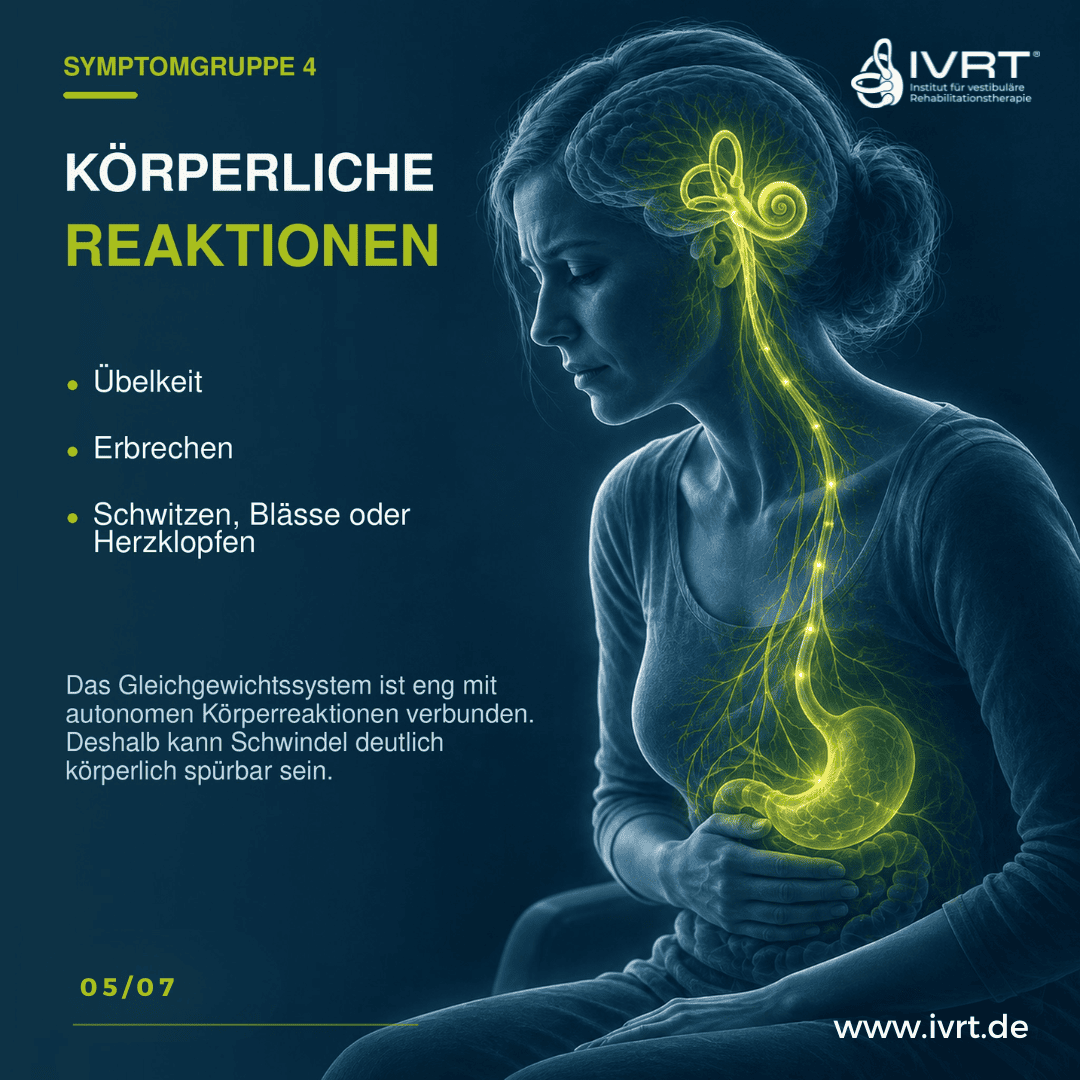
4. Autonomous body reactions: Through direct nerve connections to the autonomic nervous system, the body reacts with nausea, vomiting, sweating, flushing, or palpitations.
5. Emotional and psychological consequences: Massive uncertainty, fear of falling, depressive moods or feelings of alienation (derealization/depersonalization). These are a comprehensible consequence of the constant stress and are definitely not imaginary!
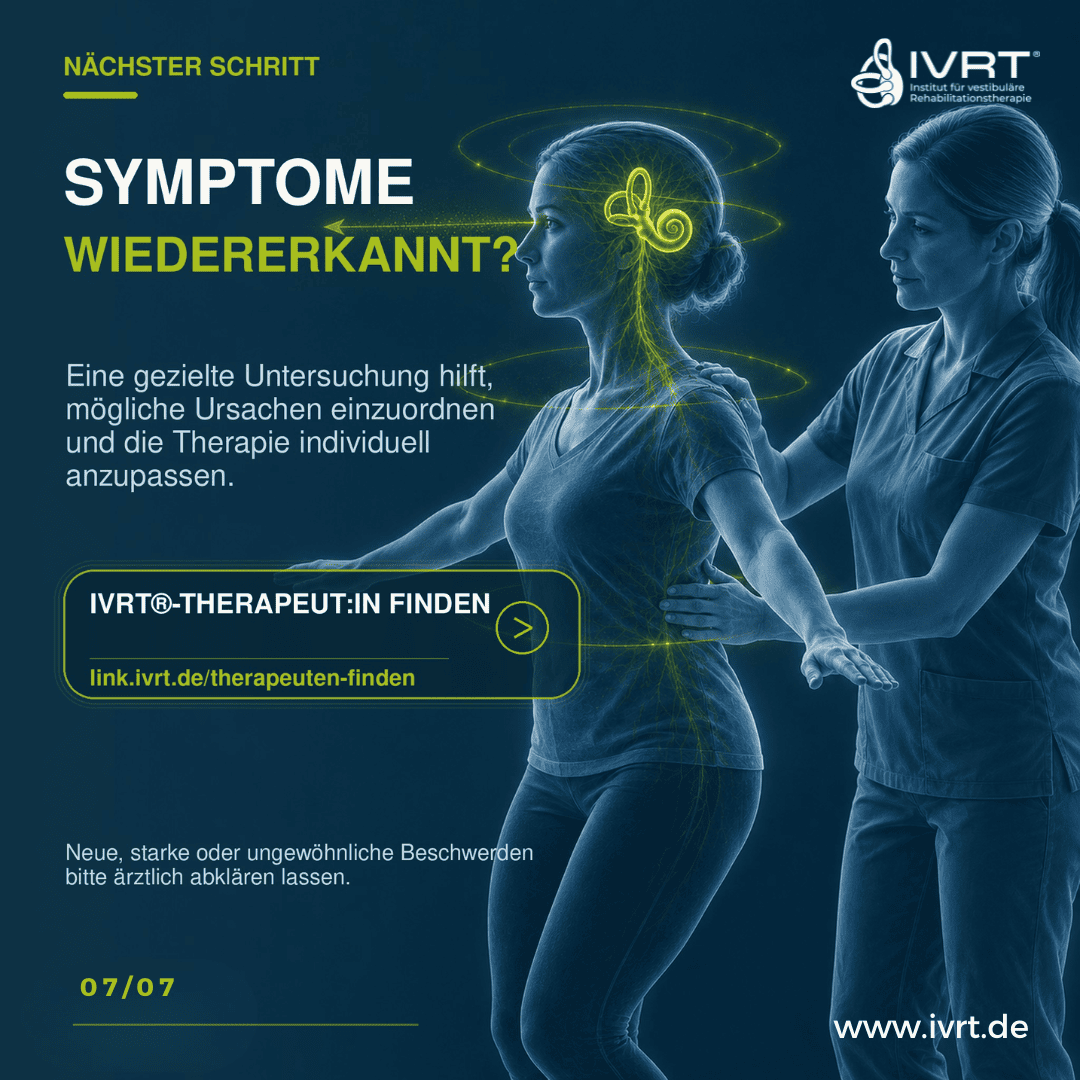
📍 Have you recognized your symptoms and are looking for qualified vertigo therapists near you for an accurate diagnosis? Use our Therapist search!
 Deutsch
 English
 Nederlands
 Dansk
 Türkçe

