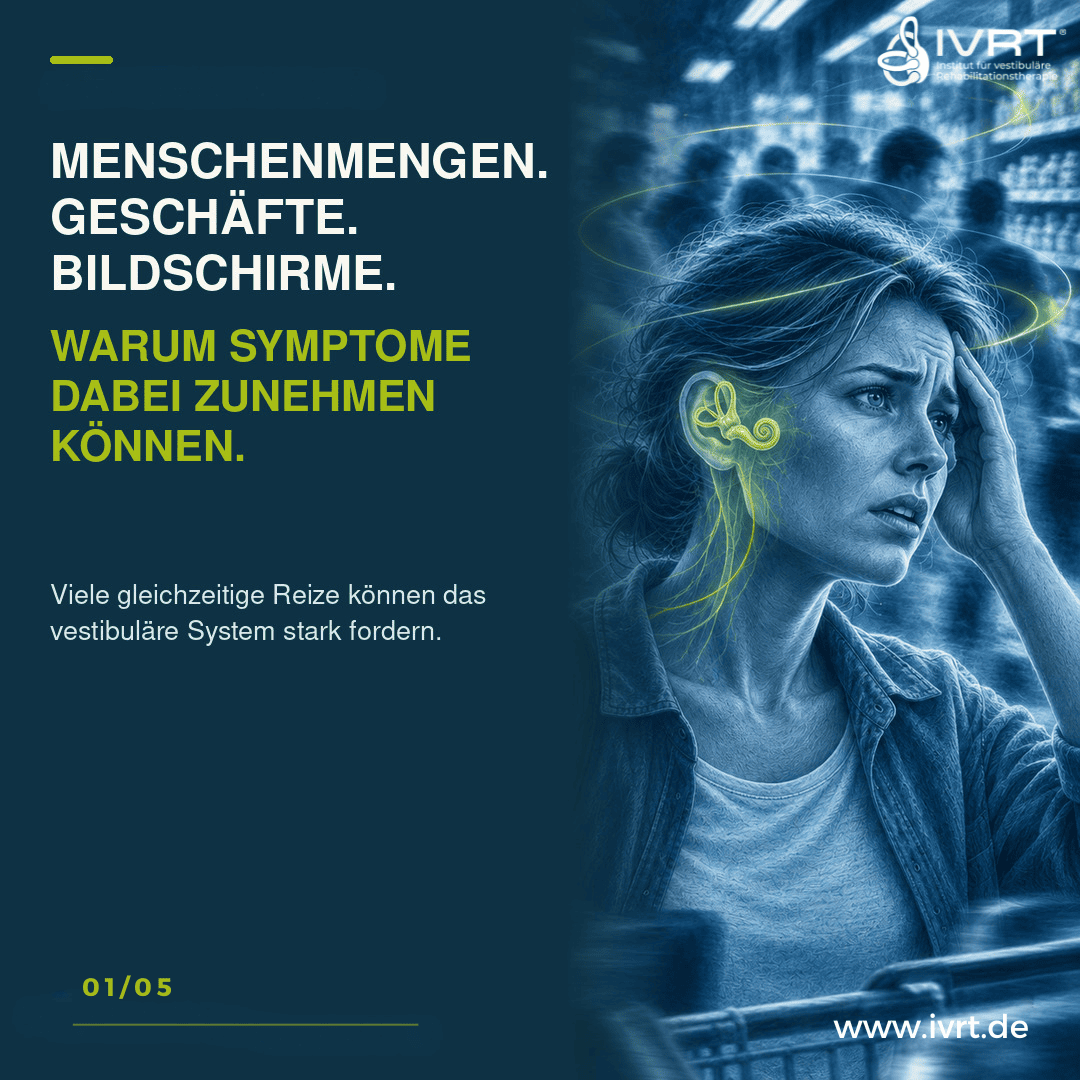
Full shopping centers, glaring lighting, endless rows of shelves or fast screens: For many people with vestibular disorders, everyday situations suddenly become an extremely demanding ordeal. But why do dizziness, uncertainty and drowsiness intensify so massively just then?
What happens in the nervous system when many simultaneous stimuli are present:
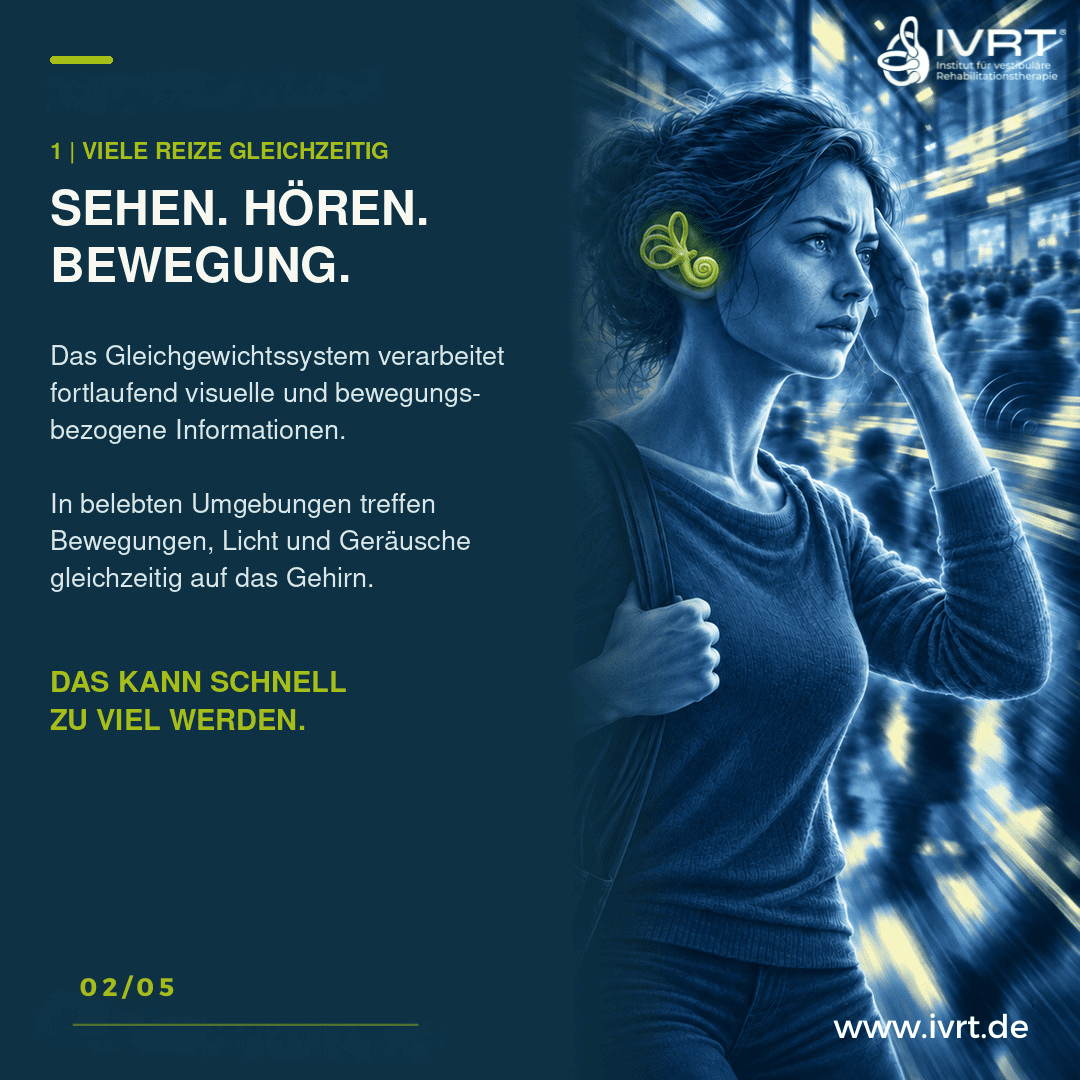
• Vision, hearing, movement: The balance system continuously processes visual and movement-related information from our environment. In busy environments, movement, bright light, and noise all simultaneously hit the brain, which can quickly overwhelm the system.
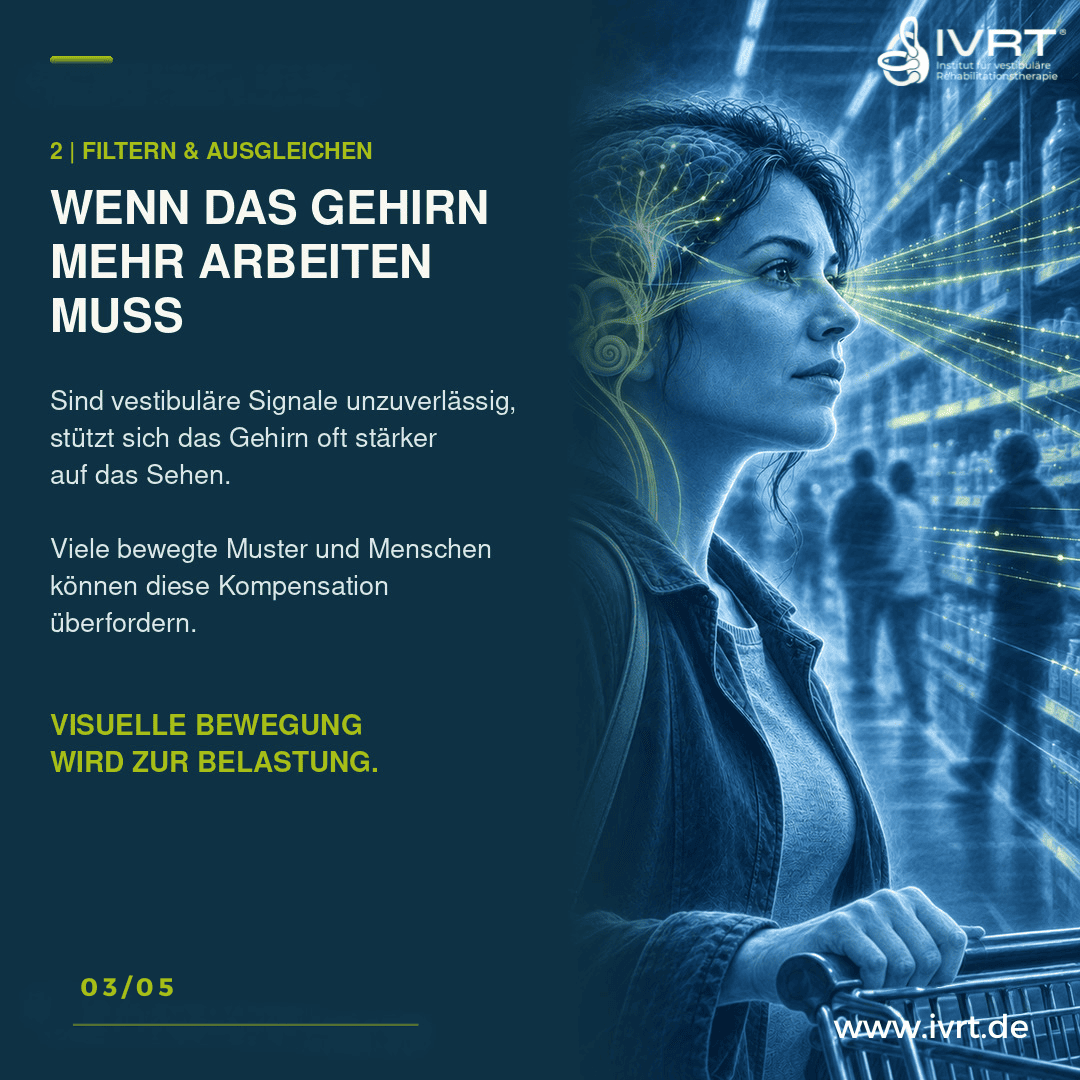
• When the brain has to work harder: If the vestibular signals from the inner ear are unreliable, the brain often relies much more on sight as a compensatory mechanism. However, many moving patterns, alternating contrasts, and crowds of people can overwhelm this visual compensation.
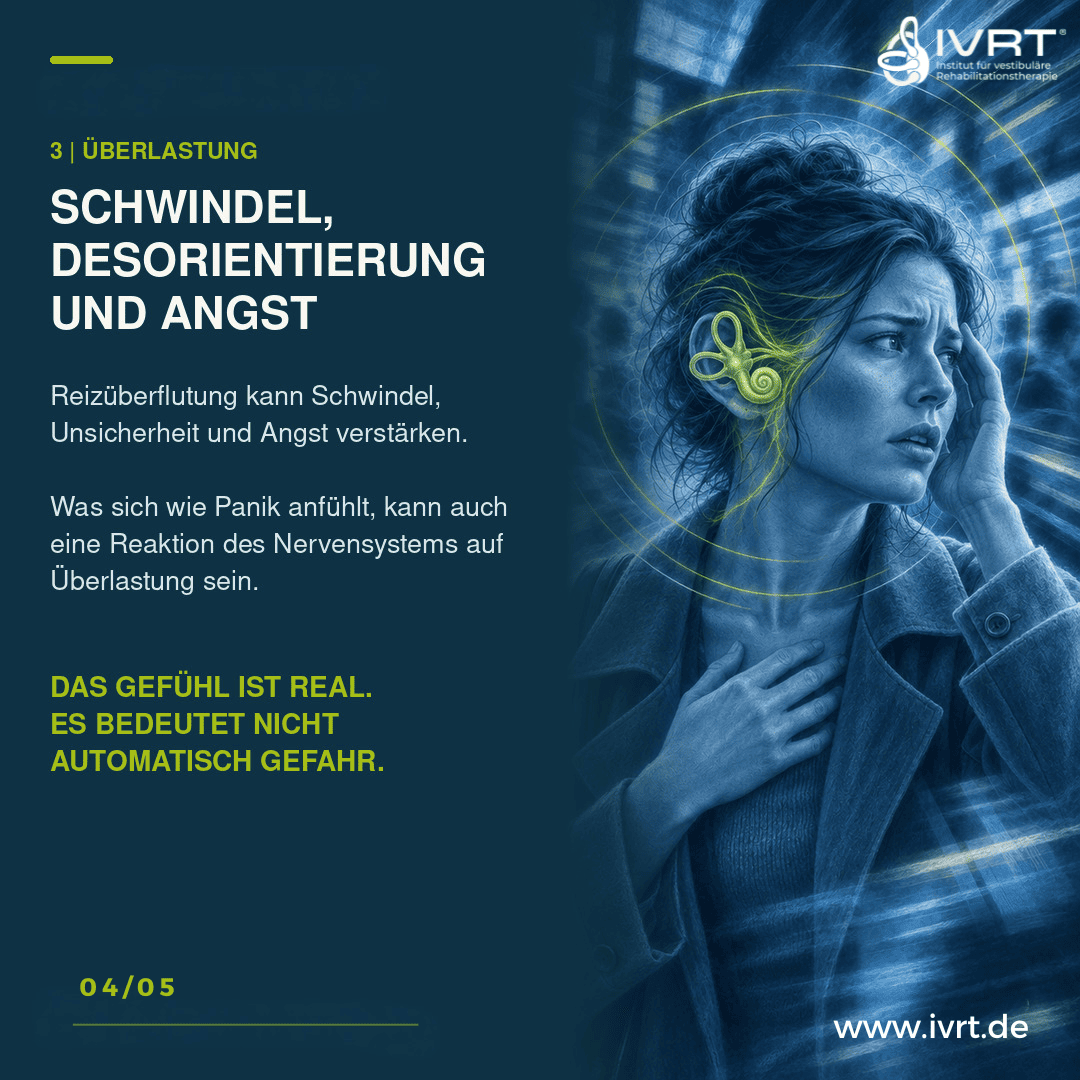
• Overload instead of panic: This overstimulation increases dizziness, disorientation, and autonomic reactions. What feels like sudden panic is actually a physiological overload reaction of the nervous system.
• The feeling is real: Your symptoms are not imaginary, but do not automatically mean an acute physical danger.
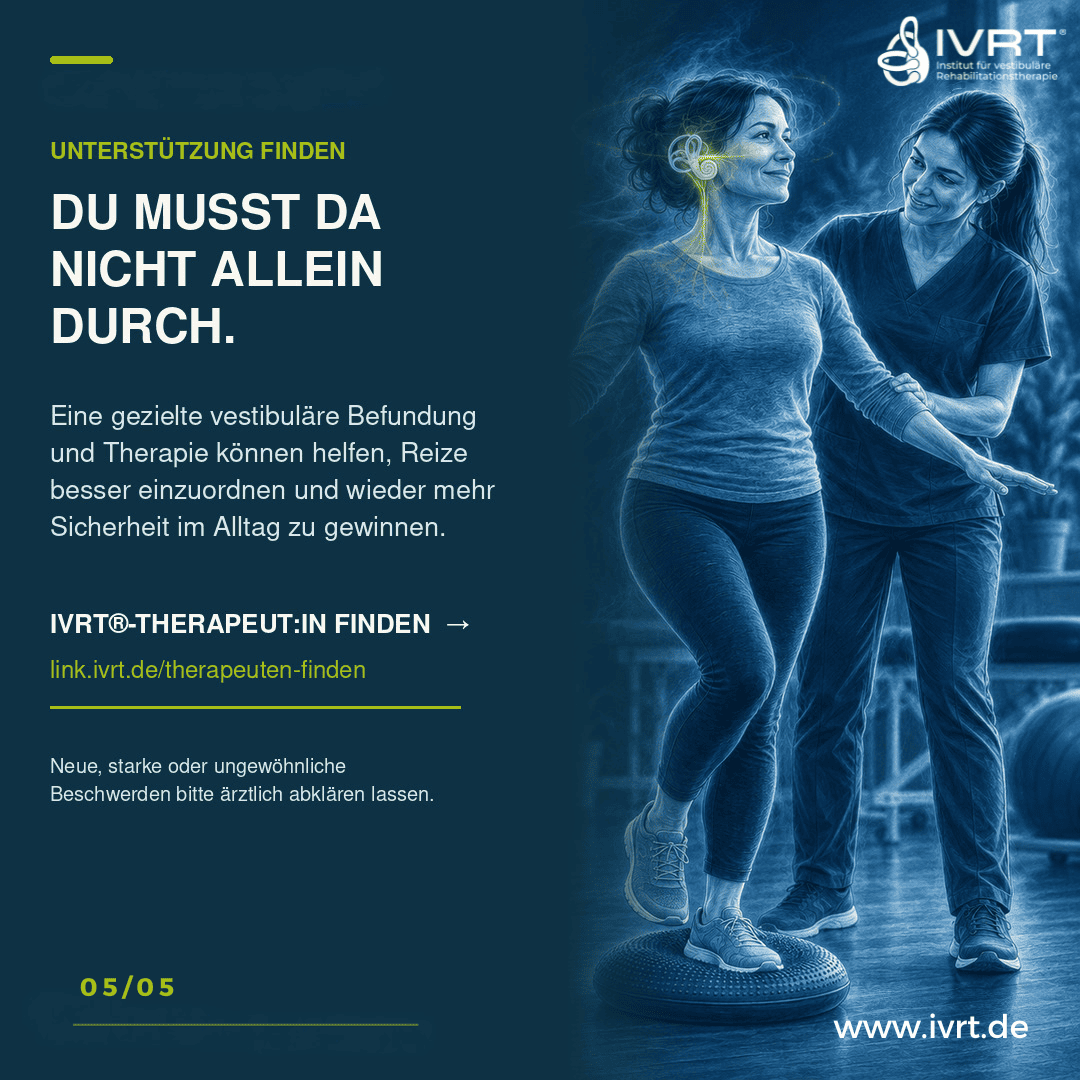
• You don’t have to go it alone: Targeted vestibular assessment and rehabilitation They help the brain to properly re-organize sensory stimuli, reduce visual dependence, and restore real security in everyday life.
📍Are you looking for qualified therapists near you who specialize in dizziness? Use our Therapist search!

 Deutsch
 English
 Nederlands
 Dansk
 Türkçe

