




Dizziness is much more than just a physical wobble or rotation – it affects mobility, visual stimuli, and mental health. Swipe through the slides for the results of a qualitative study with 30 participants:
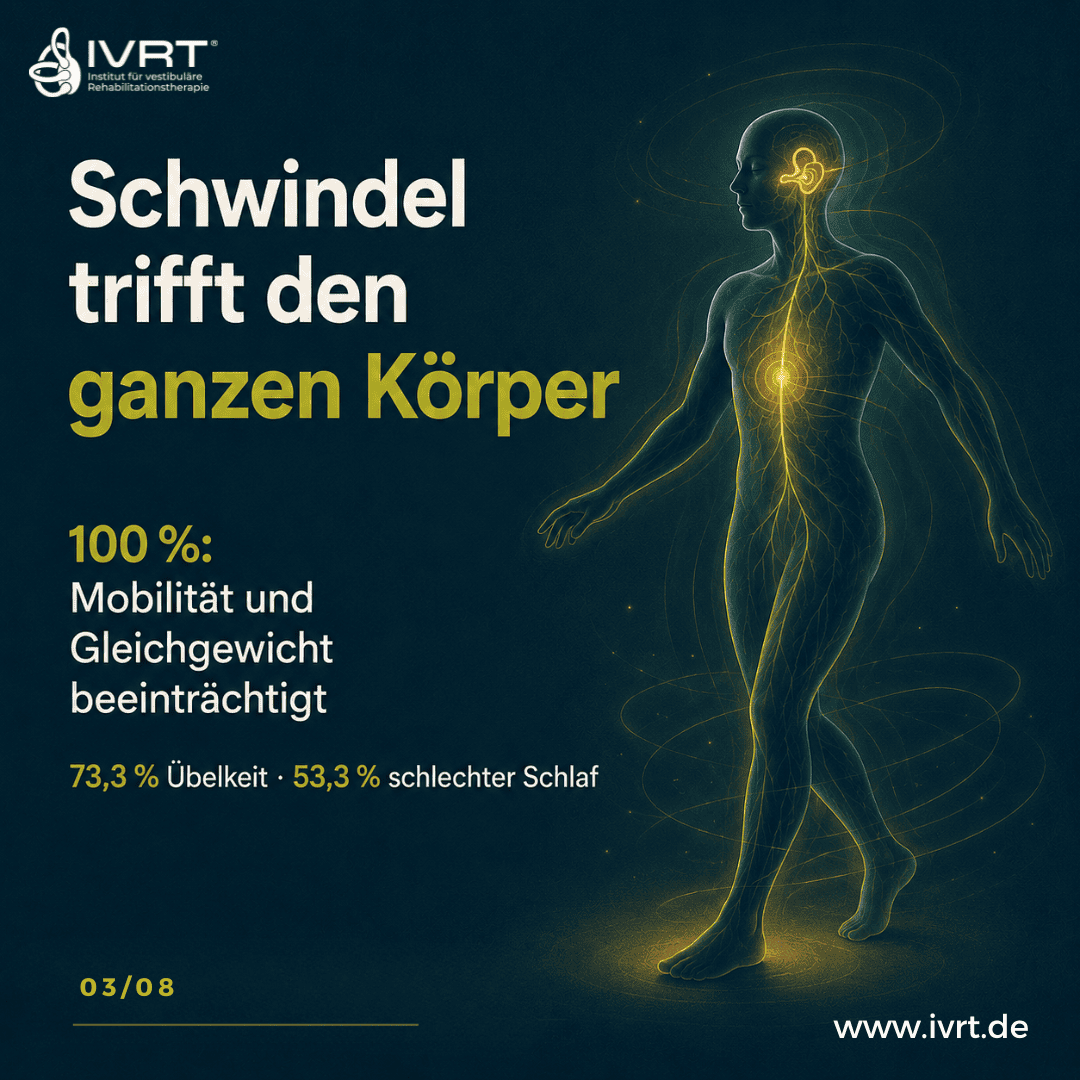
1️⃣ Physical consequences: 100 % of the respondents reported limitations in mobility and balance. Additionally, 73.3 suffered % from nausea and 53.3 % from poor sleep.
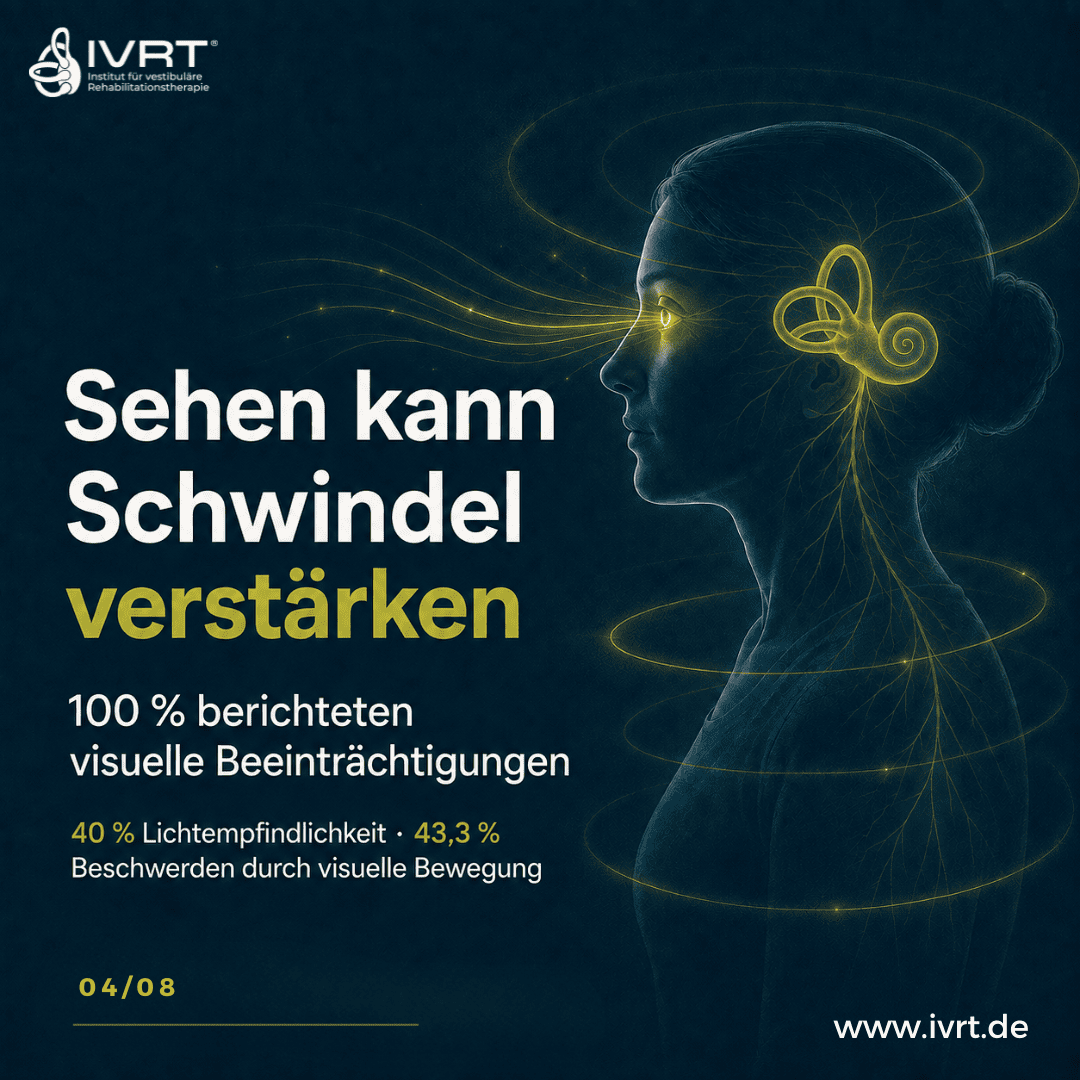
2️⃣ Visual stimuli: 100 % experienced visual impairments – 43.3 % increased complaints due to visual movements and 40 sensitivity to % light.
3️⃣ Social effects: 96.7 % reported feelings of social isolation, 80 % a loss of independence, and 76.7 % changed relationships with others.
4️⃣ Mental stress: 96.7 % named frustration or anger, 93.3 % anxiety, 90 % cognitive difficulties (brain fog) and 56.7 % phases of grief or depression.
5️⃣ Coping and context: Those affected develop active strategies – 70 % used positive adaptation through routines, mindfulness, and lifestyle changes.
Important: The data reflect the personal experiences of the study cohort (Source: McCaslin DL, Berri B, Miner JA, Graves CM, Gialloreti KL, Fansher M, Kerber KA, Adams ME, Carlozzi NE. Dizziness and its effect on health-related quality of life (DRQOL). J Vestib Res. 2026 Jul;36(4):207-219).
ㅤ
👉 Would you like to understand the connections between balance, sensory overload, and the psyche in detail? Take a look now to our Patient information or our detailed Main video Go on YouTube!
ㅤ
📍 Are you looking for qualified therapists near you who specialize in dizziness? Use our Therapist search!

 Deutsch
 English
 Nederlands
 Dansk
 Türkçe

