
For Healthcare Professionals:
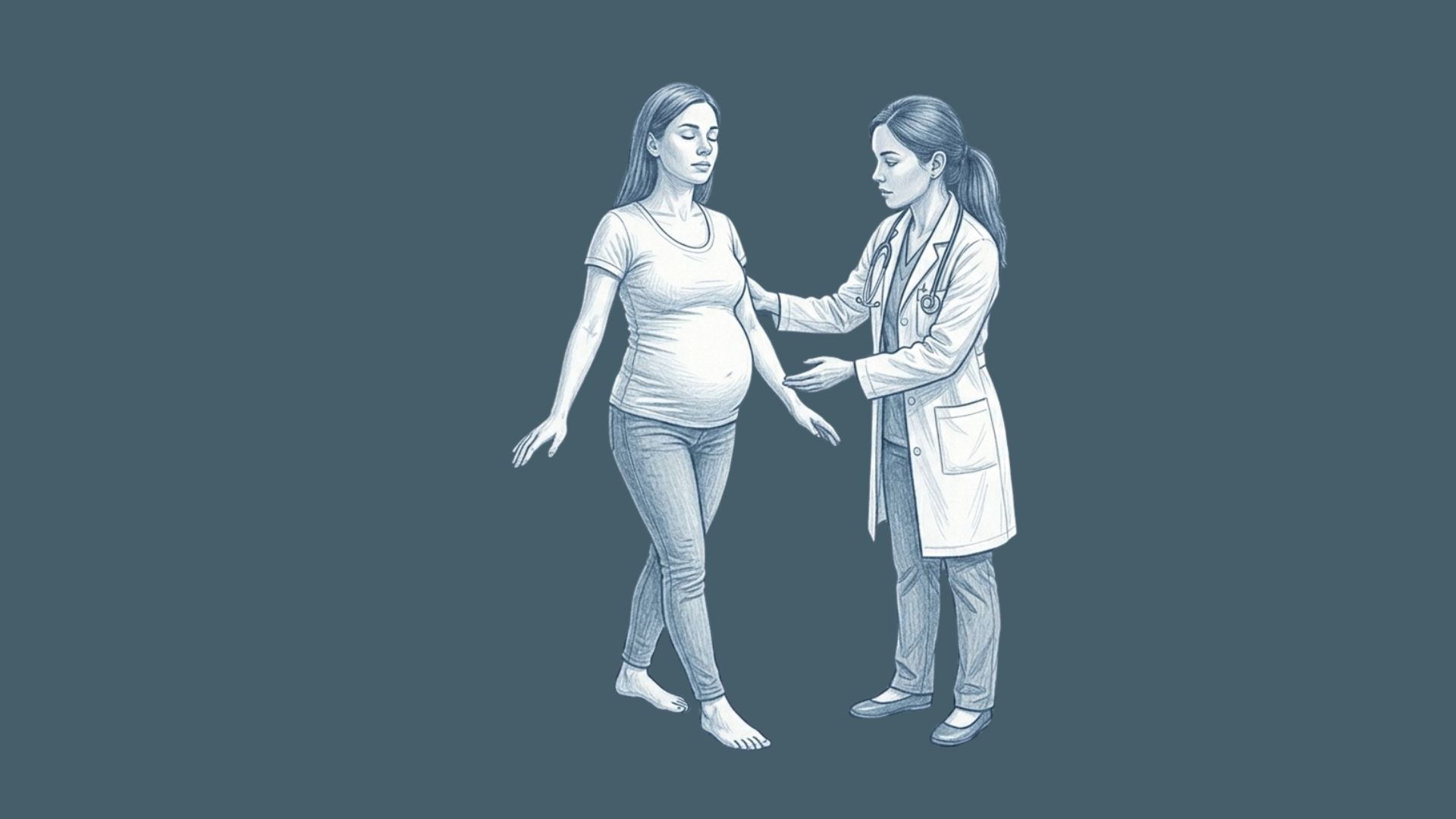
Dizziness during pregnancy is not uncommon. A recent review highlights the challenges in treating vestibular migraine, Ménière’s disease, and benign paroxysmal positional vertigo (BPPV) during gestation and shows how safety for both mother and child can be maintained.
🔗 Castillo-Bustamante M, Bhandari A, Çelebisoy N, Whitney SL, Petrak MR, Campo-Campo MN. Therapeutic Management of Vestibular Disorders During Pregnancy: A Narrative and Evidence-Based Review. Cureus. 2025;17(8):e89705.
Background & Physiology
Pregnancy induces major hormonal (estrogen/progesterone) and hemodynamic changes. These directly affect the homeostasis of the inner ear (endolymph) and central sensory processing. As a result, existing conditions such as vestibular migraine (VM) may worsen, or disorders such as BPPV may appear for the first time due to altered calcium metabolism. Additionally, the center of gravity shifts during pregnancy, making postural control more difficult and increasing the risk of falls.
Main disorders
- BPPV (positional vertigo): Particularly common in the 2nd and 3rd trimester. Causes often include altered vitamin D levels, increased calcium demand for the fetal skeleton, or prolonged supine positioning
- Vestibular migraine: Symptoms are unpredictable. While classical migraine headaches decrease in many women (50–70%), vertigo attacks may persist independently.
- Ménière’s disease: May worsen due to physiological fluid retention and hormonal fluctuations, particularly in the second trimester.
- PPPD (persistent postural-perceptual dizziness): Hormonal fluctuations, fatigue, and psychological stress may trigger or worsen maladaptive sensory processing.
Clinical management by trimester
First trimester: Safety is the highest priority because organogenesis occurs during this phase. Medications should be avoided whenever possible. The focus is on careful history taking and differential diagnosis.
Second trimester: Considered the most stable phase and often described as a “window of opportunity.” Vestibular rehabilitation therapy (VRT) and repositioning maneuvers can be performed effectively.
Third trimester: Mechanical strain becomes the main concern. Because of the weight of the uterus, the supine position may lead to vena cava compression syndrome. Modified maneuvers in side-lying or sitting positions and fall-prevention strategies are essential.
Expert tip: In the third trimester, the Li maneuver for the posterior canal and the Gufoni maneuver for the horizontal canal are particularly advantageous because they avoid prolonged supine positioning.
Conclusion for Practice
Non-pharmacological approaches are the gold standard. Vestibular rehabilitation therapy (VRT) is safe and effective in all trimesters. Medication (e.g., antiemetics or SSRIs) should only be used after interdisciplinary consultation between gynecology and neurology and in cases of severe distress.
👉 Are you interested in a comprehensive further training in vestibular rehabilitation und willst learn how to safely and evidence-based treat BPPV and other vestibular disorders — even in special patient populations.
Current further education opportunities can be found in the IVRT Course search.
For Patients – Easy to Understand
Dizziness during pregnancy: When it’s more than just circulation behind it
Many pregnant women experience dizziness—often attributed to low blood pressure or hormonal changes. But what if the world really starts spinning or the ground feels unsteady? A new scientific review shows that true balance disorders during pregnancy are often overlooked, even though they are treatable.
📄 Castillo-Bustamante M, Bhandari A, Çelebisoy N, Whitney SL, Petrak MR, Campo-Campo MN. Therapeutic Management of Vestibular Disorders During Pregnancy: A Narrative and Evidence-Based Review. Cureus. 2025;17(8):e89705.
What you should know:
- Positional vertigo (BPPV): Changes in mineral balance can cause tiny “crystals” in the inner ear to become dislodged. This leads to intense spinning sensations, especially when turning in bed or lying down.
- Hormonal influence: Hormones change the fluid balance throughout the body, including in the inner ear. This can worsen existing problems such as vestibular migraine.
- Safety first: Many people think that dizziness treatments should not be performed during pregnancy. In fact, the opposite is true: the most effective treatments do not require medication and are completely safe for your baby.
What you can do
- Targeted maneuvers: Positional vertigo can often be resolved immediately with a few specific movements. In later stages of pregnancy, we use special techniques (such as the Li maneuver) that do not require you to lie flat on your back. This helps protect both your circulation and your baby’s.
- Special exercises: So-called vestibular therapy (VRT) helps your brain adapt to the new situation and the changing center of gravity.
- Adaptation: We perform tests and exercises in a sitting or side-lying position to ensure maximum safety.
Important: Always mention persistent dizziness to your healthcare provider. It does not have to be “just the pregnancy” — help is possible and safe.
🎯 Our IVRT®-certified dizziness and vestibular therapists support you: We tailor the therapy individually to your stage of pregnancy and your specific needs. Find specialized colleagues in our IVRT therapist search