
For Healthcare Professionals:
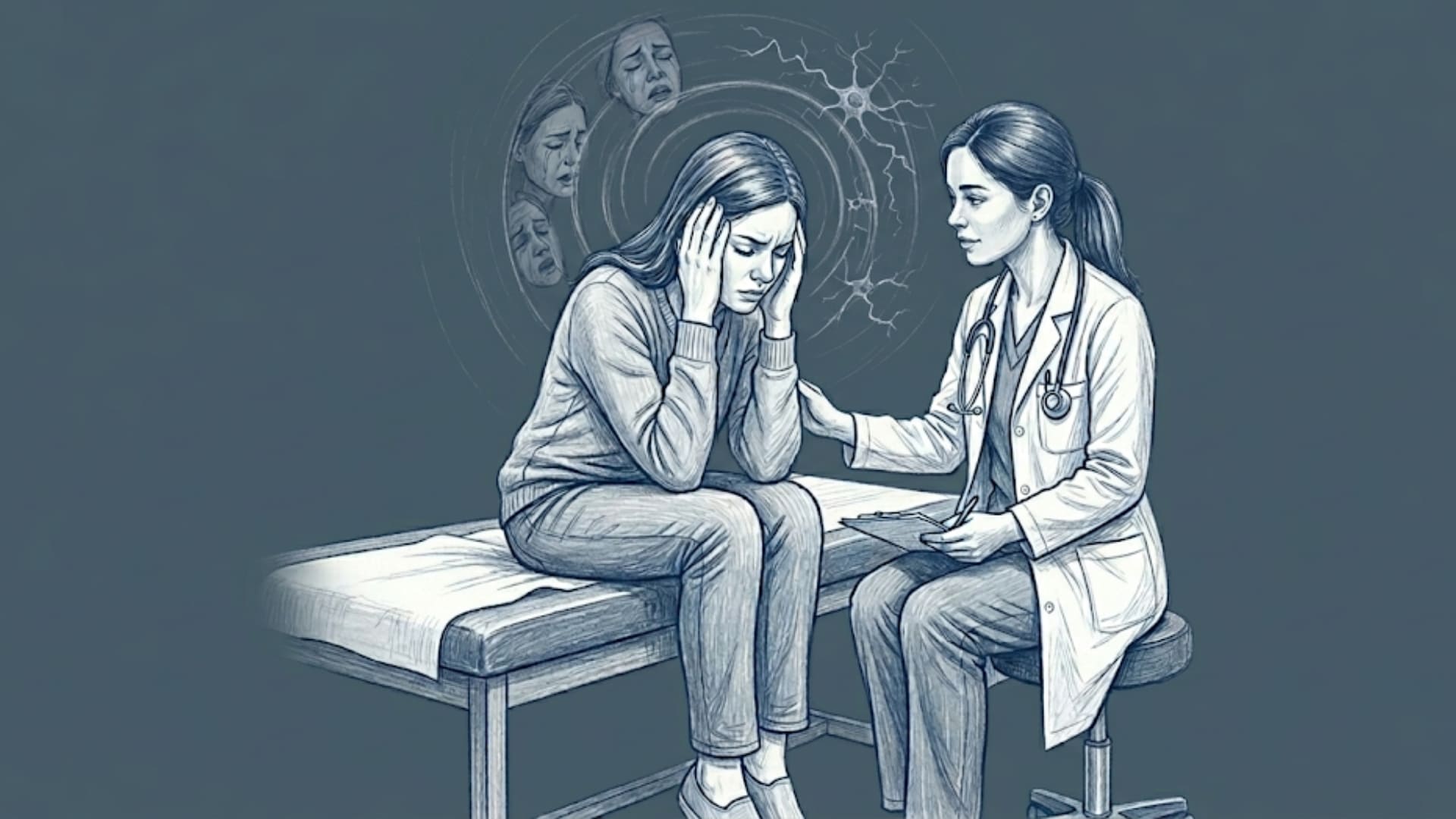
It is clinically well known that dizziness affects mental health. But how high is the actual risk? A major meta-analysis by Kim et al. shows: patients with vestibular disorders suffer from depression and anxiety disorders up to three times more often than healthy individuals. Patients with episodic conditions are particularly affected.
🔗 Kim CH, McCray LR, Nguyen SA, Staab JP, Jafri S, Rizk H. Anxiety and Depression in Adults With Vestibular Disorders: A Systematic Review and Meta-Analysis. Laryngoscope. 2026;136(2):535-546. doi:10.1002/lary.70055.
Key statistical findings of the meta-analysis
The evaluation of 85 studies with a total of 764,403 participants paints a clear picture of psychiatric comorbidities:
- Anxiety disorders: 31,4% van de duizeligheidspatiënten (vs. 8,3% in de controlegroep)
- Depressive disorders: 28.3% of dizziness patients (vs. 4.7% in controls)
- Relative risk: the risk of depression is 2.9 times higher in dizziness patients
Risk profile by diagnosis: episodic vs. single event
A central finding of the study is that the unpredictability of attacks significantly increases psychological burden. Patients with episodic disorders show much higher rates than those with a single event such as vestibular neuritis:
| Diagnosis | Anxiety prevalence | Depression prevalence |
| Meniere's disease (MD) | 47,0 % | 43,1 % |
| Vestibular migraine (VM) | 46,5 % | 35,7 % |
| positional vertigo (BPPV) | 30,6 % | 23,6 % |
| Vestibular neuritis (VN) | 19,4 % | 20,7 % |
Why is this the case?
The authors suggest several reasons for this strong correlation:
- Shared networks: There are bidirectional connections in the brain between vestibular pathways and anxiety centers (amygdala, insula, prefrontal cortex).
- Autonomic dysregulation: Reduced heart rate variability is found in both dizziness and anxiety patients.
- DHI correlation: Meta-regression showed a significant link between the Dizziness Handicap Inventory (DHI) and the severity of psychological symptoms. The greater the impairment in daily life, the stronger the psychological burden.
Conclusion for Practice
The study highlights the need for an integrated care model. Vestibular deficits should not be considered in isolation. Psychological factors significantly influence the success of neuro-otological interventions and overall quality of life. integrierten Versorgungsmodells. Vestibuläre Defizite sollten nicht isoliert betrachtet werden. Psychologische Faktoren beeinflussen den Erfolg neuro-otologischer Interventionen und die allgemeine Lebensqualität maßgeblich.
👉 Are you interested in a comprehensive further training in vestibular rehabilitation and want learn how to identify and professionally manage the psychosomatic component in dizziness therapy?
Current further education opportunities can be found in the IVRT Course search.
For Patients – Easy to Understand
Dizziness and mental well-being: why anxiety and low mood often go hand in hand
Wenn der Boden unter den Füßen schwankt, gerät oft auch das psychische Gleichgewicht ins Wanken. Eine riesige neue Studie mit über 750.000 Teilnehmern hat nun bestätigt: Menschen mit Schwindelerkrankungen haben ein deutlich höheres Risiko für Angstzustände und Depressionen.
📄 Kim CH, McCray LR, Nguyen SA, Staab JP, Jafri S, Rizk H. Anxiety and Depression in Adults With Vestibular Disorders: A Systematic Review and Meta-Analysis. Laryngoscope. 2026;136(2):535-546. doi:10.1002/lary.70055.
Key insights for you::
- You are not alone: Almost one in three dizziness patients develops anxiety, and nearly one in four shows signs of depression. In conditions like Meniere's disease or vestibular migraine , it is nearly one in two.
- Anxiety is a biological response: Your brain uses the same networks for balance and for assessing danger. When balance signals are disrupted, your “fear center” is triggered more easily.
- Unpredictability increases stress: Dizziness that occurs in episodes (e.g., Ménière’s disease) places a greater burden on mental health than a single event.
What you can do
- Seek holistic treatmentDon’t rely solely on physical exercises. Look for treatment approaches that actively include the psychosomatic component. Mental strategies for managing anxiety are often just as important as balance training.
- Targeted training (VRT): Specific balance training not only improves stability but also reduces anxiety by increasing confidence in daily life.
- Act early: The earlier psychological stress is recognized and treated as part of the condition, the lower the risk of chronic progression (e.g., PPPD).
🎯 Our IVRT®-certified dizziness and vestibular therapists support you: We understand the close link between dizziness and mental health. Our therapy focuses on restoring your confidence in everyday life so your nervous system can calm down again. Find specialized therapists near you in our IVRT therapist search