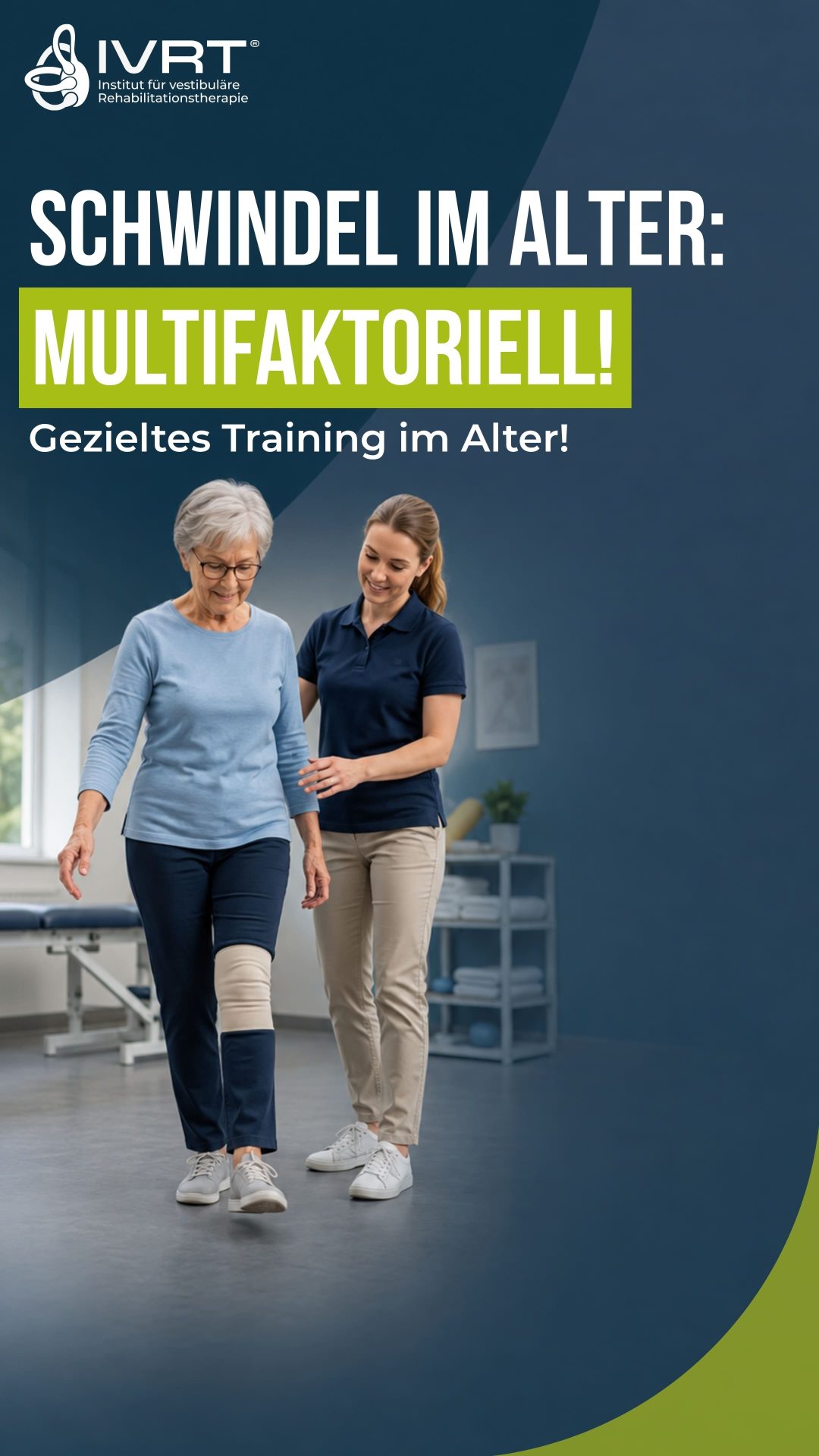
Disregards the function of the balance organ as it ages (Presbyvestibulopathy), there are often additional limitations: visual impairment, artificial joints, osteoarthritis or polyneuropathy. This combination increases the risk of falls, but withdrawal is the biggest mistake.
Why dizziness in old age targeted training needs:
- Multifactorial stress: When the eyes are also impaired in addition to the inner ear, and the joint sensors (proprioception) are impaired due to polyneuropathy or arthritis, the brain lacks all the important control systems.
- The trap of withdrawal: Many affected people avoid activities and stay at home. But the less one moves, the faster muscles, the nervous system and the balance organ continue to deteriorate.
- No fear-avoidance behavior: Protection amplifies uncertainty. Those who remain active keep the remaining systems alert and functioning properly.
- The brain learns at any age: Even in old age, the brain responds excellently to specific stimuli. With targeted training, the brain can be trained to learn new skills. vestibular rehabilitation The degenerative process can be demonstrably slowed down and safety restored!
👉 Do you want to understand the causes, tests, and training strategies for age-related dizziness in detail? Take a look now to our detailed Patient information or that Main video on YouTube may apply.
📍 Are you looking for qualified therapists near you who specialize in dizziness? Use our Therapist search!
 Deutsch
  English
  Nederlands
  Dansk
Dansk  Türkçe
