
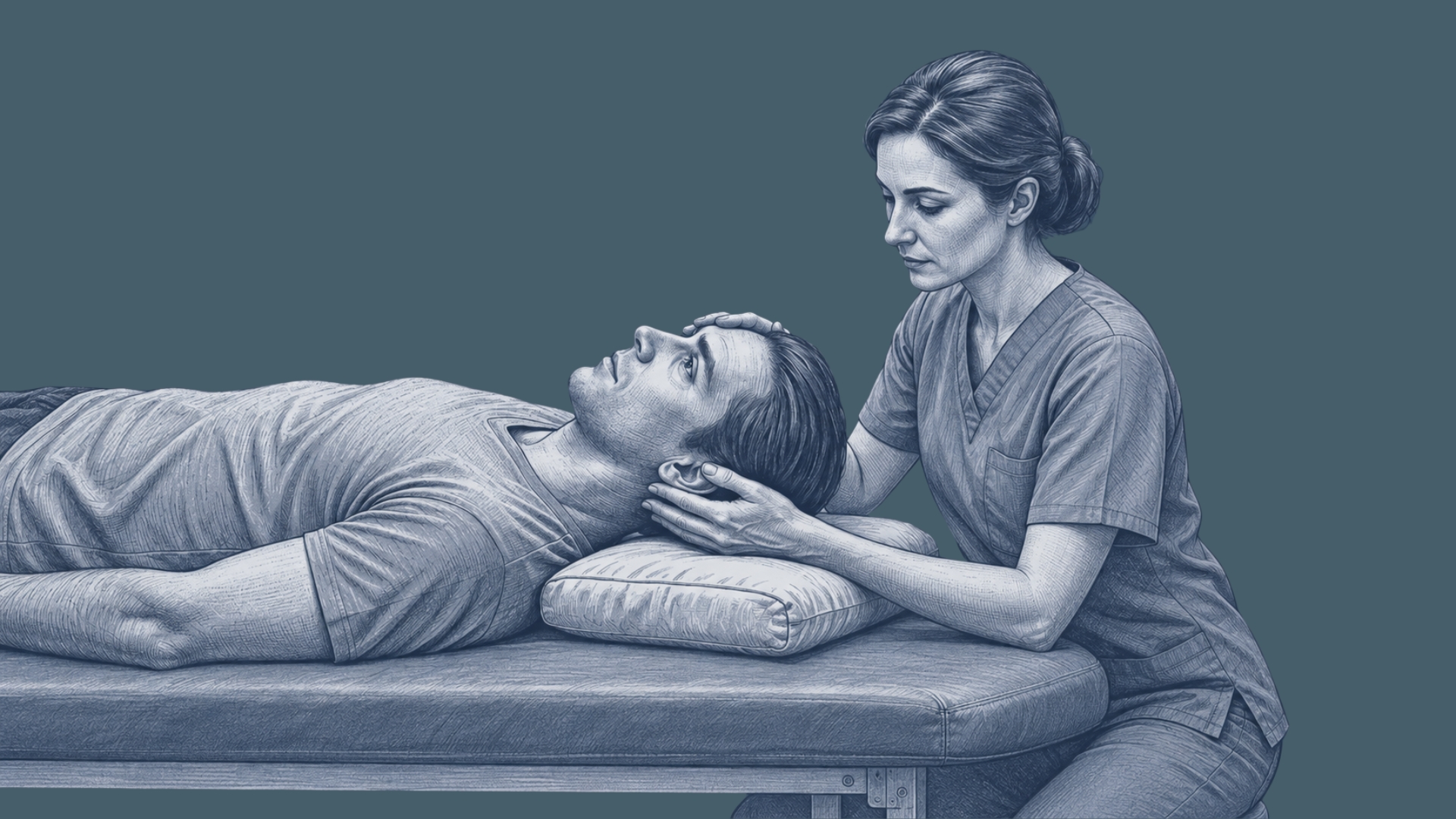
For Healthcare Professionals:
A benign paroxysmal positional vertigo (BPLS) can be used after a Skull-brain trauma It is common to see BPLS in a stationary rabbit population – a recent study shows – and it is often not recognized based on the history alone.
📄 Ho ACY, Wee SK. Symptomatic and Asymptomatic Benign Paroxysmal Positional Vertigo Identified During Inpatient Traumatic Brain Injury Rehabilitation. J Head Trauma Rehabilitation. 2026.
What was examined?
119 adults with head injury were screened at BPLS as part of inpatient neurological rehabilitation.
In 109 people was a reliable investigation possible. Important: The Storage diagnostics was performed regardless of whether dizziness had been reported previously.
Almost every second person examined had BPLS
In 49 out of 109 female patients a BPLS was diagnosed.
This corresponds to 45 % the sample of rehabilitation services examined.
The most commonly affected were:
- posterior groin: 65,3 %
- horizontal longitudinal flow: 22,4 %
- several passages: 12,2 %
Many had not previously reported any dizziness.
Especially interesting: Only 19 of the 49 BPLS patients had reported dizziness before the examination.
Another 13 noticed symptoms only during the storage inspection. Nine showed typical storage nystagmus, but did not report any subjective vertigo.
This shows: BPLS can be present after a head injury, even if typical dizziness symptoms are absent in the history.
Treatment is usually successful
The repositioning maneuvers were successful 95,9 % the affected person successfully.
In 73,5 % One treatment session was enough.
What does this mean for practical application?
The results suggest that after a head injury, one should not rely solely on the history of dizziness.
Especially in inpatient rehabilitation, systematic storage diagnostics can help identify treatable BPLS cases that might otherwise be overlooked.
Important
The 45 % do not apply to all people after a head injury.
A selected population was studied in a stationary neurological rehabilitation program. The results cannot therefore be directly applied to all patients after a traumatic brain injury or concussion.
Conclusion
BPLS was frequently present in this stationary SHT sample and was often not evident from the history of the patient.
At the same time, BPLS was successfully treated in almost all of the affected patients.
👉 Are you interested in a comprehensive further training in vestibular rehabilitation and would you like to learn more about the diagnosis and treatment of benign paroxysmal positional vertigo?
Current further education opportunities and course dates can be found in the IVRT Course search.
For Patients – Easy to Understand
Storage fraud after head injury
After a Skull-brain trauma can be a benign paroxysmal positional vertigo (BPPV) They are typical of brief dizziness attacks that occur with certain head movements, for example when lying down, getting up, or turning in bed.
A recent study shows: Not all those affected previously report dizziness.
Source
Ho ACY, Wee SK. Symptomatic and Asymptomatic Benign Paroxysmal Positional Vertigo Identified During Inpatient Traumatic Brain Injury Rehabilitation. J Head Trauma Rehabilitation. 2026.
What did the study show?
In a stationary rehabilitation center, 109 patients with head trauma were reliably examined.
In 49 people – that is 45 – % were found to have BPLS.
But: Only 19 of these 49 people had previously reported dizziness.
Some noticed complaints only during the examination. Others showed typical eye movements for BPLS without experiencing any significant dizziness themselves.
The good news
BPLS is often very well treatable.
In the study, repotitioning maneuvers were performed 95,9 % The patient was successfully treated. In almost 3/4 of the cases, just one treatment session was sufficient.
Important
The 45 % means No, That almost one in two people who suffer a head injury will develop BPLS.
A special group of patients was studied in a stationary neurological rehabilitation program. The results therefore cannot be applied to all people after a traumatic brain injury.
Conclusion
Storage dizziness can be present after a head injury, even if no typical dizziness has been reported before.
Targeted investigation can help identify treatable causes
🎯 Our IVRT®-certified dizziness and vestibular therapists Do you support: IVRT therapist search
 Deutsch
  English
  Nederlands
  Dansk
Dansk  Türkçe
