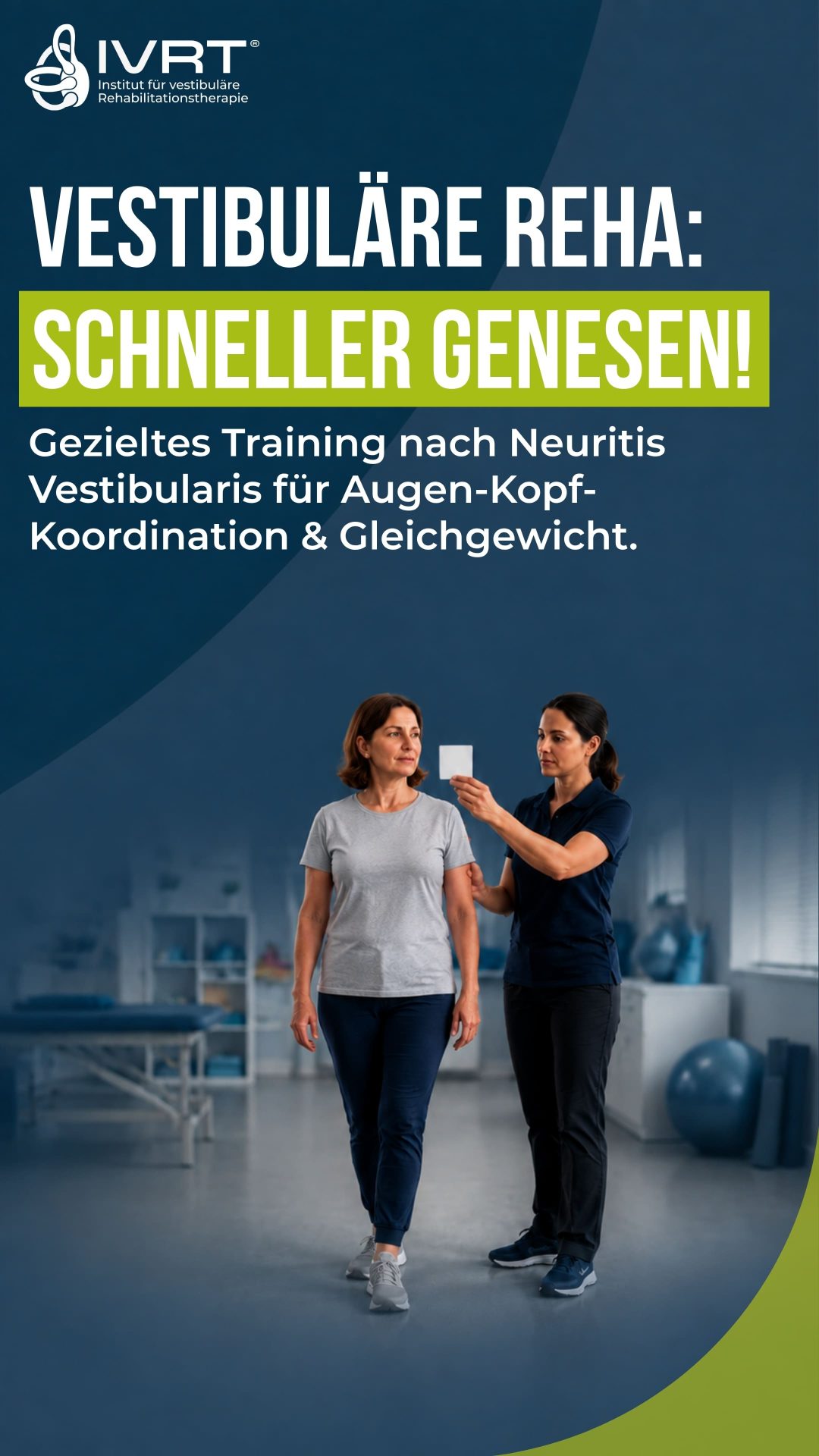
After the acute phase (about 2–3 days), the extreme spinning sensation subsides, but many affected individuals still struggle with significant difficulty walking and standing for weeks afterwards.
Why this is the case and how the brain learns now:
👉 Brain compensation phase: Our brain tries to compensate for the loss of the balance organ through the eyes and the joint sensors (proprioception).
👉 Challenge of darkness and unevenness: When it is dark (the eyes become disoriented as a help) or the ground is uneven, such as at the beach or in the forest, the weakened inner ear is left on its own – the dizziness immediately gets stronger!
👉 Vestibular rehabilitation therapyThrough Targeted exercises For eye-head coordination and balance, the brain is demonstrably able to compensate much faster and more sustainably!
👉 Good prognosis: The Vestibular neuritis has a very good chance of healing – usually just a few targeted appointments with a doctor’s prescription are enough, provided that it is practiced regularly at home!
👉 Want to understand the exact exercises and compensation mechanisms? Take a look now at our detailed Patient information or that Main video on YouTube may apply.
📍 Are you looking for qualified therapists near you who specialize in dizziness? Use our Therapist search!
 Deutsch
  English
  Nederlands
  Dansk
Dansk  Türkçe
