
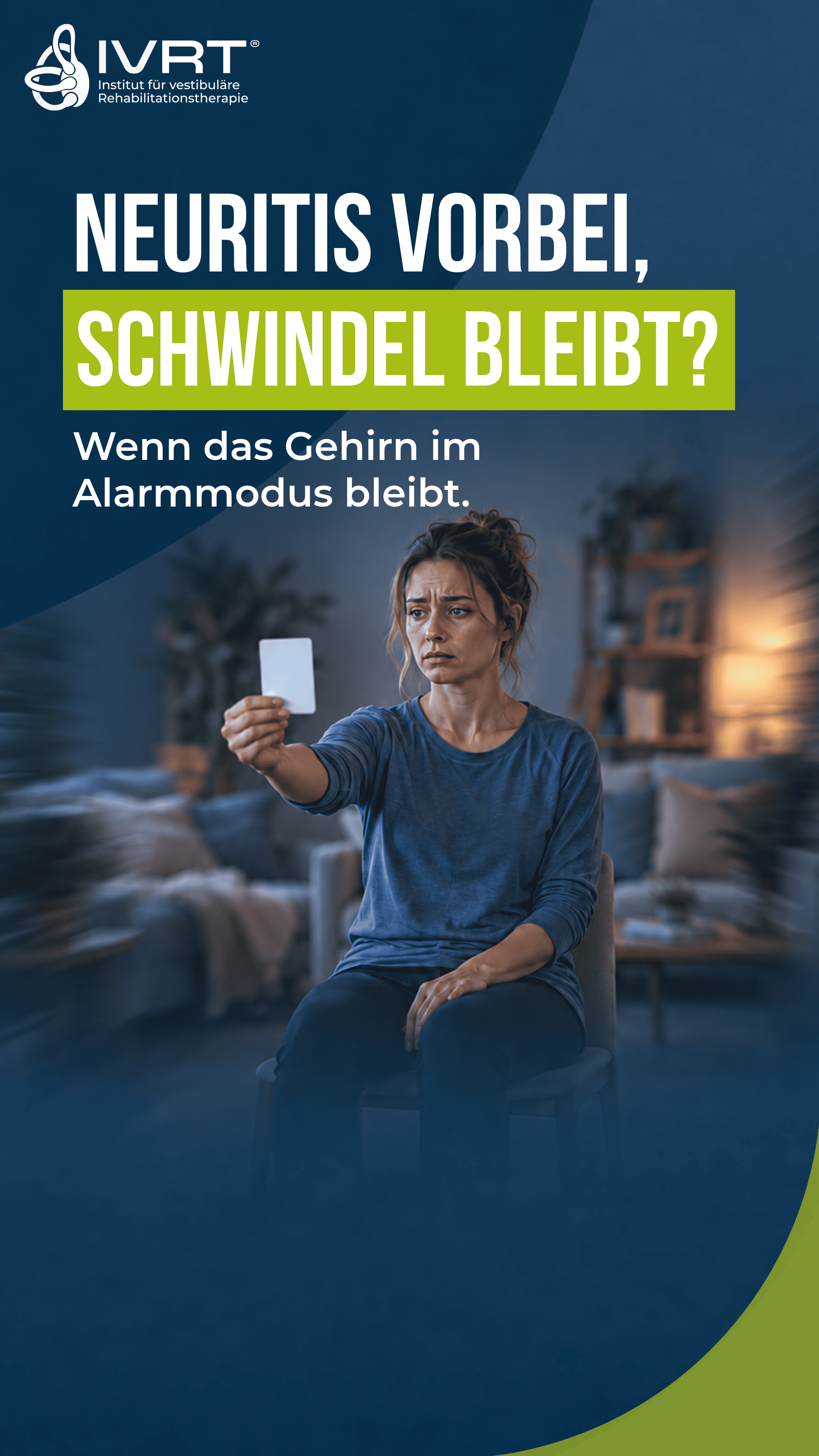
You were told that after 2-3 months after a Vestibular neuritis You are once again completely free of complaints, yet even after almost a year the world still swings at every head movement and driving is hardly imaginable? Some of the patients despair when after a fall in balance, no lasting improvement occurs and standard exercises become useless.
Why dizziness can become chronic after a stroke:
- It’s no longer the nerves that are to blame: If after 2-3 months, in young, otherwise healthy people, drowsiness and uncertainty persist, it most often no longer has to do with the original inflammation. Very often, a secondary inflammation has developed. Persistent postural sensory dizziness (PPPD) developed.
- The brain in survival mode: The sudden failure of the balance organ puts the autonomic nervous system into high alert. As soon as the nerve heals, this alert should subside. However, in PPPD the brain remains trapped in this alert state.
- Continuous scan mode: The brain continuously scans its surroundings. This causes visual hypersensitivity and any rapid movement immediately overwhelms the brain.
- Body signals are over-evaluated: The system also constantly scans one’s own body. The slightest twinge and the slightest indisposition are perceived as overwhelming. Constant self-observation, worries and fears keep this vicious cycle alive day in and day out.
- Why eye exercises alone are not enough: Standardized image stabilization Although it trains the reflex, it does not calm the overstimulated alarm system. Here, specialized approaches are needed, such as habituation therapy, exposure therapy, and cognitive behavioral therapy.
👉Do you want to understand why the brain remains in an alert state after a disruption of equilibrium and how this leads to chronic PPPD? Take a look now to our detailed Patient information or that Main video on YouTube may apply.
📍 Are you looking for qualified therapists near you who specialize in dizziness? Use our Therapist search!
 Deutsch
 English
 Nederlands
 Dansk
 Türkçe

