
Flashing light signs, rotating fans, or rapid scene changes on a smartphone: For many vertigo patients, moving images and restless lighting trigger pure overload in the brain. Often, two diagnoses are involved: Vestibular migraine or one Persistent postural-perceptual dizziness (PPPD). But who actually reacts more sensitively?
ㅤ
The 3 typical visual triggers and what the research says about them:
Targeted desensitization: Both in PPPD and vestibular migraine, this overstimulation can be managed within a structured treatment plan. vestibular rehabilitation Train and build up effectively.
Light stimuli: Flashing lights, strobe lights and disco lights, bright headlights or flashing billboards put the nervous system to its limits extremely quickly.
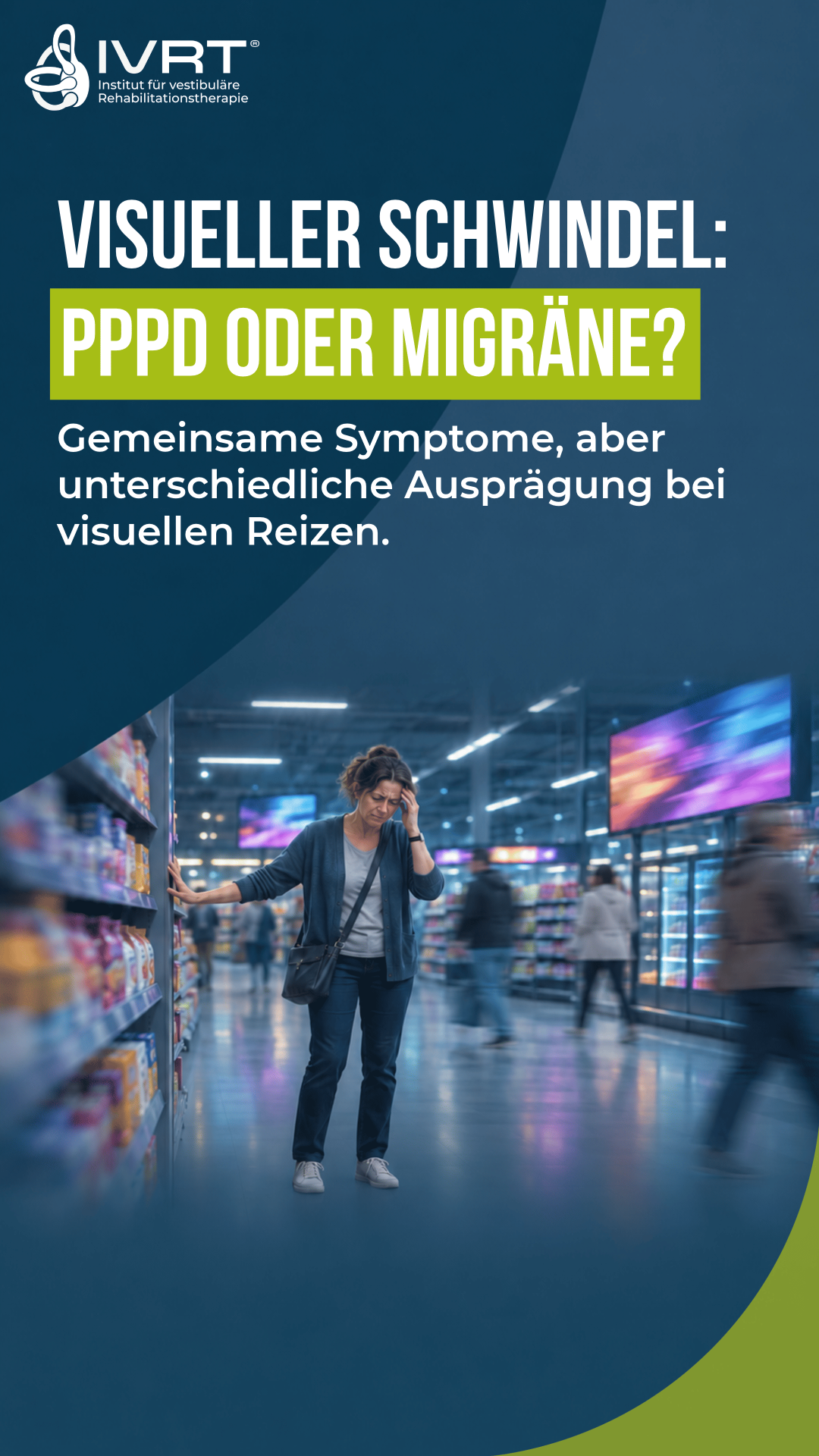
Moving patterns and environments: Rapid movement in the field of view, e.g. running fans, busy traffic, or crowded aisles in a shopping mall, overloads the central processing of stimuli.
Screens and fast cuts: Bright displays on smartphones, laptops, or TVs, as well as action films with rapid camera movements, massively exacerbate dizziness and drowsiness.
The study comparison (PPPD vs. Vestibular Migraine): A comparative study investigated the question of which condition is more likely to cause visual hypersensitivity. The result: Although both groups suffer from the condition, PPPD patients showed significantly stronger sensitivity to visual motion stimuli in their surroundings.
👉Do you want to understand more about what PPPD is? Take a look at our detailed Patient information or ours Main video on YouTube. Want to understand vestibular migraine in detail? Check out our detailed Patient information or ours Main video Go to YouTube for more information.
📍 Are you looking for qualified therapists near you who specialize in dizziness? Use our Therapist search!
 Deutsch
 English
 Nederlands
 Dansk
 Türkçe

