
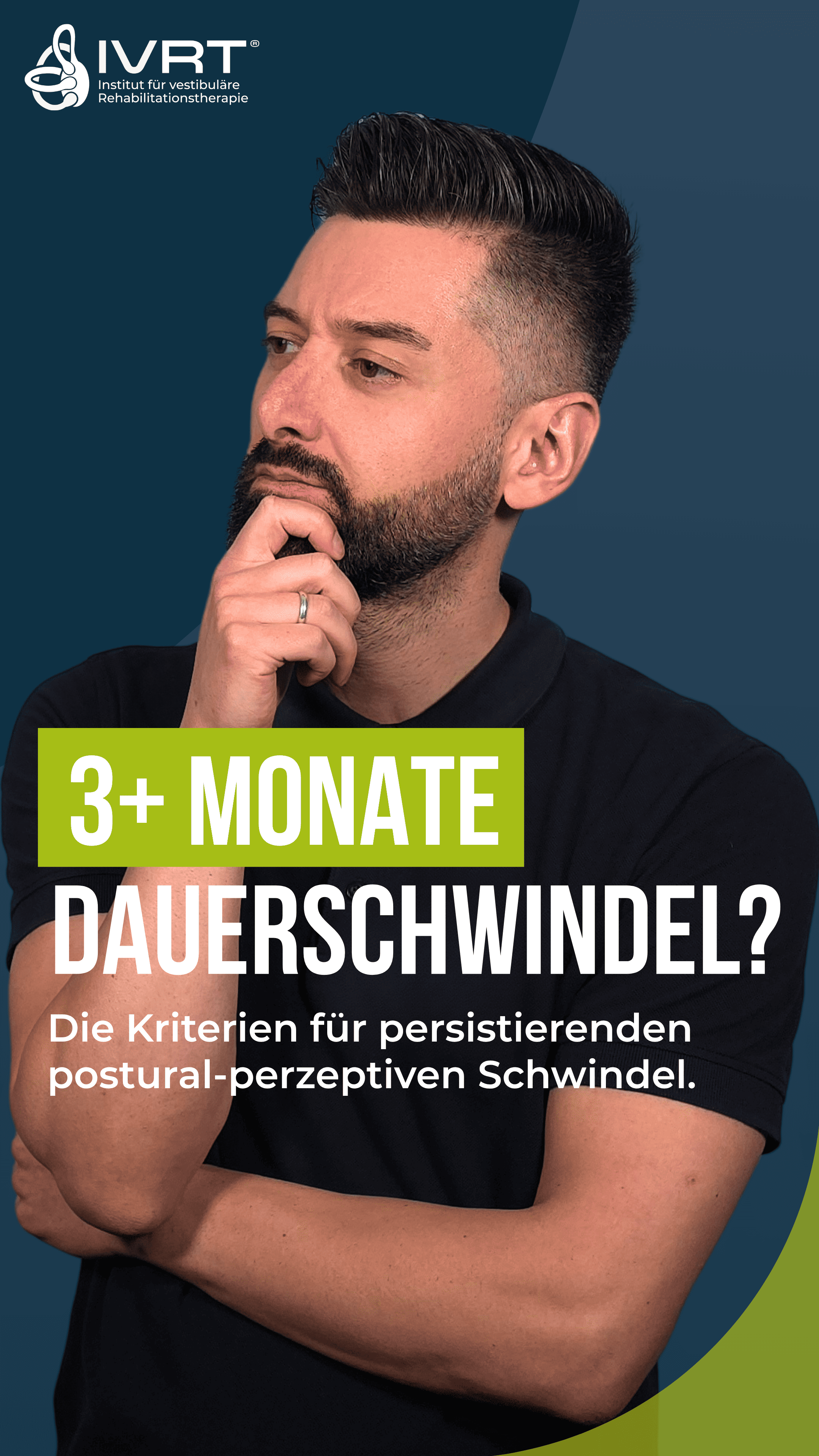
In PPPD (persistent postural-perceptual dizziness) There is no single medical test that simply indicates a positive result like in a blood test. Instead, the diagnosis is based on the international criteria of the Bárány Society (the International Society for Neuro-Ophthalmology). The 4 criteria in summary:
1️⃣ Duration: The dizziness has persisted for at least 3 months (before that, the brain is still in the normal adaptation phase).
2️⃣ Symptoms: The symptoms worsen with upright posture, movement, or visual stimuli (e.g., supermarket, television, traffic).
3️⃣ Trigger: A previous event with severe dizziness (e.g. BPPV, Neuritis, Infection such as COVID, panic attack, or high stress).
4️⃣ Suffering pressure: There is a significant limitation in everyday life.
ㅤ
⚠️ The most important thing: PPPD shows that your brain has remained in an alarm state – but it is not dangerous and can be treated specifically!
ㅤ
In this video, I explain the exact diagnostic criteria and why the 3-month period is so crucial.
ㅤ
👉 Would you like to read more about how PPPD is diagnosed and treated? Take a look now at our detailed Patient information or that Main video on YouTube may apply.
📍 Are you looking for qualified therapists near you who specialize in dizziness? Use our Therapist search!
 Deutsch
  English
  Nederlands
  Dansk
Dansk  Türkçe
